
ICSI Treatment in Chennai — Advanced Fertilization at Yaal Fertility Centre
Intracytoplasmic Sperm Injection — advanced single-sperm fertilization
What is ICSI Treatment?
Intracytoplasmic Sperm Injection (ICSI) is a laboratory technique in which a single, carefully selected sperm is injected directly into a mature egg using a fine glass micro-needle, under a high-powered microscope. It is not a separate treatment from IVF — it is a step performed within an IVF cycle, replacing the moment where egg and sperm would otherwise be left to fertilise on their own.
The distinction matters. In conventional IVF, thousands of sperm are placed alongside each egg in a dish and one must successfully penetrate it unaided. That requires sperm present in sufficient number, moving well, and shaped normally. ICSI removes every one of those requirements. Because the embryologist places the sperm inside the egg directly, only one viable sperm is needed per egg — which is why ICSI can achieve fertilisation even when sperm are extremely few, poorly motile, or retrieved surgically from the testicle.
ICSI was developed for severe male factor infertility and remains the treatment of choice for it. It is also used when a previous IVF cycle produced poor or failed fertilisation, and when very few eggs are retrieved and each one must be given the best possible chance.
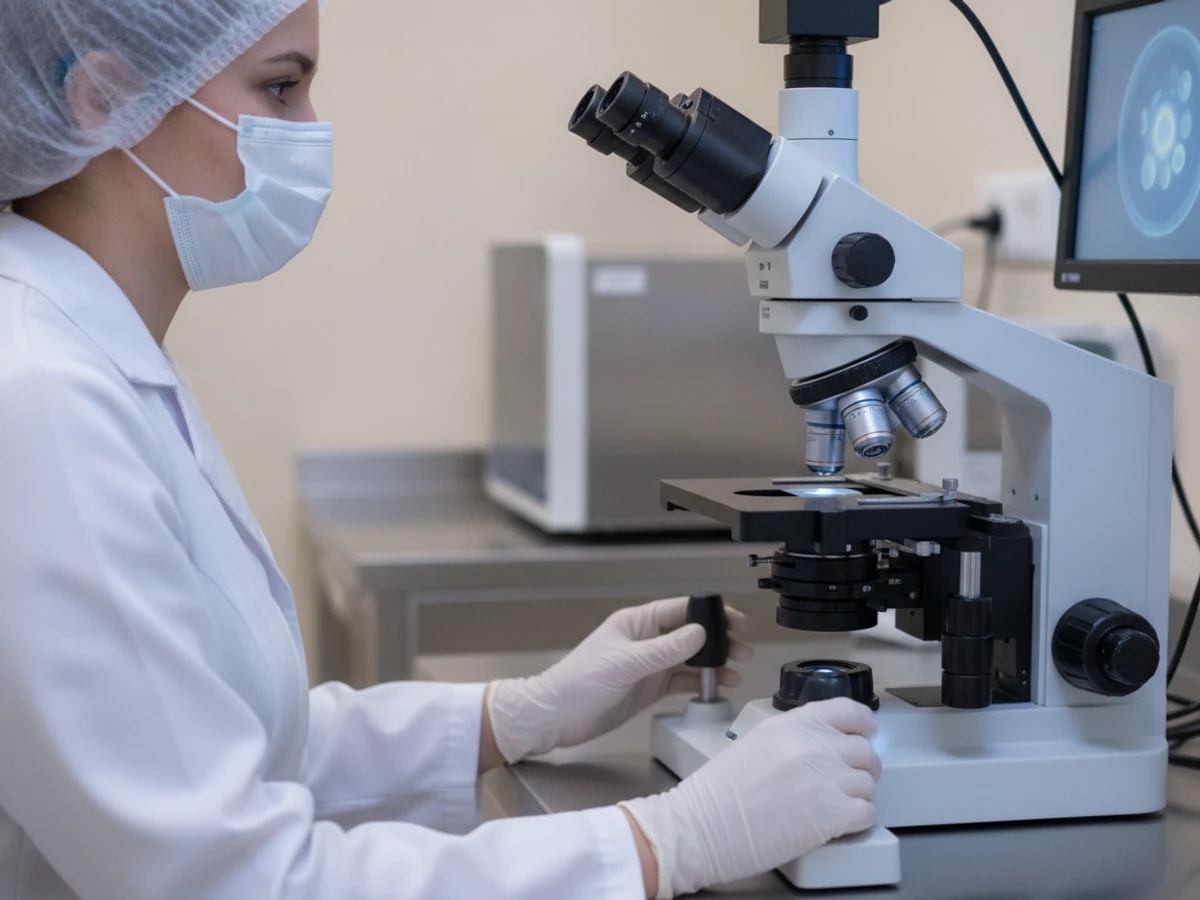
At Yaal Fertility Centre, ICSI is performed by our embryology team on micromanipulation equipment in our on-site laboratory, with Dr. Rukkayal Fathima — MS (OG), MRCOG (UK), Fellowship in Reproductive Medicine — determining whether ICSI is the right approach for your case. Fertilisation rates with ICSI are typically 70–80% of injected eggs.
This page is for general information and is not a substitute for personal medical advice. Fertility treatment depends on individual circumstances — please book a consultation to discuss your own case.
Who Is It For?
Treatment Process
Consultation & Male Fertility Assessment
Detailed semen analysis, hormonal evaluation, and assessment to determine if ICSI is the best approach. Dr. Rukkayal designs a personalised treatment plan.
Ovarian Stimulation & Monitoring
The female partner undergoes controlled ovarian stimulation with regular ultrasound and blood test monitoring, identical to the IVF process.
Egg Retrieval & Sperm Collection
Eggs are retrieved via ultrasound-guided aspiration under sedation. Sperm is collected via ejaculation or surgical retrieval (TESA/MESA) if needed.
ICSI Procedure
Under a high-powered microscope, our embryologist selects the best sperm and injects it directly into each mature egg using a micro-needle. This ensures fertilization even with very few or poor-quality sperm.
Embryo Culture & Selection
Fertilized eggs are cultured in our advanced incubators for 3-5 days. The best quality embryos are selected for transfer.
Embryo Transfer & Follow-Up
Selected embryo(s) are transferred to the uterus. A pregnancy test is conducted 14 days later. Surplus quality embryos can be frozen for future use.
Success Rates
| Age Group | Success Rate |
|---|---|
| Under 30 | 72% |
| 30–34 | 68% |
| 35–37 | 58% |
| 38–40 | 42% |
| 41–42 | 28% |
| Over 42 | 14% |
Success rates are based on clinical pregnancy per embryo transfer at Yaal Fertility Centre. Individual results may vary.
ICSI vs Conventional IVF — What Actually Differs?
Everything about an ICSI cycle is identical to an IVF cycle except one step in the laboratory. You undergo the same ovarian stimulation, the same monitoring, the same egg retrieval, the same embryo culture, and the same embryo transfer. The difference is confined to how fertilisation is achieved.
In conventional IVF, each retrieved egg is placed in a dish with tens of thousands of prepared sperm. Fertilisation happens on its own: a sperm must reach the egg, bind to its outer layer, penetrate it, and enter. Nature does the selecting. This works well when sperm are plentiful and healthy.
In ICSI, the embryologist immobilises a single sperm, draws it into a micro-needle finer than a human hair, and injects it through the egg’s outer layer directly into the cytoplasm. The sperm no longer has to swim, bind, or penetrate anything. The embryologist selects it, based on its appearance and movement, rather than leaving selection to chance.
This is why ICSI succeeds where IVF fails in male factor cases. If a man has a very low count, the dish approach may not have enough sperm to make fertilisation likely; if motility is poor, the sperm may never reach the egg; if morphology is abnormal, it may be unable to penetrate. ICSI sidesteps all three obstacles.
The trade-off is that ICSI is a more invasive laboratory procedure and adds cost to a cycle. It is therefore used where there is a reason to use it — not by default.
When Is ICSI Recommended?
ICSI is a clinical decision made from your diagnostic results, not a preference or an upgrade you choose. Dr. Rukkayal recommends it in the following situations:
- Severe male factor infertility — very low sperm count (oligozoospermia), poor movement (asthenozoospermia), or a high proportion of abnormally shaped sperm (teratozoospermia). This is the classic and strongest indication.
- Azoospermia — no sperm at all in the ejaculate. Where sperm can be retrieved surgically from the testicle or epididymis, ICSI is the only way to use them, because surgically retrieved sperm are too few and too immature to fertilise an egg unaided.
- Previous fertilisation failure — where a conventional IVF cycle produced poor fertilisation or none at all, ICSI is used in the next cycle to remove that failure point.
- Very few eggs retrieved — when only a small number of eggs are available, ICSI maximises the chance that each one fertilises rather than risking the loss of the whole cycle.
- Frozen or surgically retrieved sperm — samples that are limited in quantity, where none can be wasted.
- Unexplained infertility after failed IVF — where no cause has been identified but conventional IVF has not worked.
If your semen analysis is normal and you have no history of fertilisation failure, conventional IVF is usually appropriate and ICSI adds cost without adding benefit. Dr. Rukkayal will tell you plainly which applies to you.
What If There Is No Sperm in the Ejaculate?
A diagnosis of azoospermia — no measurable sperm in the ejaculate — is understandably one of the most distressing results a man can receive. It is not, however, the end of the road, and it does not necessarily mean no sperm exists.
Azoospermia falls into two broad categories. In obstructive azoospermia, sperm is being produced normally but cannot get out, because of a blockage in the reproductive tract. In non-obstructive azoospermia, sperm production within the testicle is itself impaired — but even then, small pockets of sperm production often remain.
In both cases, sperm can frequently be retrieved directly through a surgical procedure:
- TESA (Testicular Sperm Aspiration) — sperm drawn from the testicle with a fine needle.
- MESA (Microsurgical Epididymal Sperm Aspiration) — sperm collected from the epididymis, typically in obstructive cases.
- Micro-TESE (Microdissection Testicular Sperm Extraction) — a microsurgical search through testicular tissue for isolated areas of sperm production, used in non-obstructive cases.
Sperm obtained this way are few in number and immature, and cannot fertilise an egg on their own. ICSI is what makes them usable. A single retrieved sperm injected into a single egg is all that is required.
Dr. Rukkayal coordinates these procedures with urologists, so the retrieval and the ICSI cycle are timed together.
Is ICSI Safe? What the Evidence Shows
ICSI has been in clinical use since the early 1990s, and it is among the most extensively studied procedures in reproductive medicine. Millions of children have been born following ICSI worldwide.
The broad finding from three decades of follow-up is reassuring: children conceived through ICSI have health outcomes comparable to those conceived through conventional IVF or naturally. This is the basis on which ICSI is offered as standard care internationally.
Two points deserve honest mention rather than being glossed over. First, because ICSI bypasses natural sperm selection, there has been long-standing scientific interest in whether it could pass on genetic causes of male infertility to a son. Where a genetic cause for severe male infertility is suspected, genetic counselling and testing are offered before treatment — this is precisely why that step exists. Second, ICSI involves physically penetrating the egg with a needle, and a small proportion of eggs are damaged by the procedure and do not survive it; this is factored into how many eggs are injected.
Neither point is a reason to avoid ICSI where it is indicated. They are reasons to use it where indicated rather than by default — which is our approach.
Does ICSI Guarantee Fertilisation or Pregnancy?
No — and it is important to separate the two, because they are different questions and are often confused.
Fertilisation is what ICSI directly improves. Typically 70–80% of injected eggs fertilise successfully. That is high, but it is not 100%: an egg may be immature, or of poor quality, or damaged during injection, and the selected sperm may not be viable despite looking normal. ICSI removes the barriers created by sperm, but it cannot compensate for egg quality.
Pregnancy depends on much more than fertilisation. A fertilised egg must develop into a healthy embryo over 3–5 days of culture, that embryo must be chromosomally normal, the uterine lining must be receptive, and implantation must occur. Age drives most of this, which is why our ICSI success rates are reported by age band rather than as one number — from 72% under 30 down to 14% over 42.
So ICSI reliably solves a sperm problem. It does not solve an egg-quality problem, an embryo-quality problem, or an implantation problem. Being clear about that up front is part of setting realistic expectations, and Dr. Rukkayal will do so during your consultation rather than after.
Frequently Asked Questions
What is the difference between IVF and ICSI?+
Is ICSI safe for the baby?+
Can ICSI be done with very low sperm count?+
What if no sperm is found in the ejaculate?+
Does ICSI guarantee fertilization?+
Does ICSI cost more than IVF?+
How long does an ICSI cycle take?+
Does ICSI improve success rates if sperm is normal?+
Related Treatments
Explore other treatments that may complement your care plan
IVF Treatment
In Vitro Fertilization — the gold standard in assisted reproduction
Learn More →Genetic Testing (PGT)
Preimplantation genetic testing for healthier pregnancies
Learn More →Male Infertility
Comprehensive male fertility evaluation and treatment
Learn More →TESA & Micro-TESE
Surgical sperm retrieval for azoospermia, combined with ICSI
Learn More →Ready to Start Your ICSI Treatment Journey?
Book a consultation with Dr. Rukkayal Fathima to discuss your personalised treatment plan.