
For women navigating the complex path to parenthood, understanding the link between endometriosis and fertility is often the first step toward finding a clear, successful solution. While this chronic condition presents distinct challenges to natural conception, modern reproductive medicine offers highly effective, structured pathways to help you achieve a healthy pregnancy. By understanding how the disease behaves and exploring advanced treatment options, you can transform a journey of uncertainty into a well-guided plan for success.
What is Endometriosis and How Does It Affect Fertility?
Endometriosis is a complex, estrogen-dependent gynecological condition characterized by the growth of tissue similar to the lining of the uterus (the endometrium) outside the uterine cavity. Most commonly, these lesions develop on the ovaries, fallopian tubes, outer uterine wall, and the pelvic peritoneum. Because this misplaced tissue responds to monthly hormonal cycles, it swells, breaks down, and bleeds with every menstrual cycle. However, unlike the lining inside the uterus, this blood has no way to exit the body, resulting in chronic inflammation, internal scarring, and deep tissue pain.
How Endometriosis Alters the Pelvic Environment
The pelvic cavity is a highly sensitive environment where delicate anatomical structures must interact perfectly to achieve conception. When endometrial-like tissue implants on pelvic structures, the body's immune system responds with continuous, localized inflammation. Over time, this chronic inflammatory state triggers the formation of pelvic adhesions and dense scar tissue.
These adhesions can physically bind organs together, distorting the pelvic anatomy. For successful conception, the fallopian tube must be free to move and gently sweep the ovary to pick up a released egg. When scar tissue glues the fallopian tubes to the ovaries, pelvic sidewalls, or bowel, this physical transport mechanism is blocked or severely compromised, preventing the egg and sperm from ever meeting.
The Impact on Egg Quality and Implantation
Beyond physical and anatomical blockages, the chronic inflammatory fluid present in the pelvis of women with endometriosis can be toxic to reproductive cells. This fluid contains elevated levels of cytokines, chemokines, and reactive oxygen species (ROS) that can damage both the eggs and sperm.
- Egg Quality: The inflammatory microenvironment within the ovaries can compromise the development of oocytes (eggs), leading to lower egg quality, chromosomal abnormalities, and reduced fertilization rates.
- Sperm Motility: As sperm travel through the pelvic and uterine tract, exposure to this inflammatory fluid can impair their motility and viability, reducing their ability to penetrate and fertilize the egg.
- Embryo Implantation: The inflammation can alter the expression of crucial adhesion molecules and genes within the endometrium, reducing uterine receptivity and making it difficult for a fertilized embryo to implant securely.
While these factors make endometriosis a leading cause of female infertility, it is crucial to recognize that endometriosis does not make pregnancy impossible. With targeted medical interventions and advanced reproductive techniques, the obstacles created by this hostile pelvic environment can be systematically bypassed.
Stages of Endometriosis and Your Conception Odds
To standardize diagnosis and treatment, the American Society for Reproductive Medicine (ASRM) classifies endometriosis into four distinct stages. This classification is primarily based on the location, extent, depth, and severity of endometrial implants, fluid-filled cysts, and pelvic adhesions observed during evaluation.
| ASRM Stage | Classification | Typical Presentation | Impact on Ovarian Reserve & Anatomy |
|---|---|---|---|
| Stage I | Minimal | Superficial implants, no significant adhesions. | Negligible anatomical distortion; mild localized inflammation. |
| Stage II | Mild | Deeper implants, primarily in the pouch of Douglas; minimal scarring. | Mild inflammatory environment; fallopian tubes remain open. |
| Stage III | Moderate | Multiple deep implants, small ovarian endometriomas, clear adhesions. | Adhesions begin to restrict tubal mobility; ovarian tissue affected. |
| Stage IV | Severe | Large endometriomas, dense "frozen pelvis" adhesions, complete tubal blockage. | Significant destruction of ovarian reserve; severe anatomical distortion. |
The Four Stages of Endometriosis Explained
- Stage I (Minimal): Characterized by a few superficial, isolated implants outside the uterus, with no significant scar tissue or adhesions.
- Stage II (Mild): Involves more numerous implants that may lie deeper within the pelvic lining. Mild, filmy adhesions may be present, but the fallopian tubes and ovaries generally retain their normal positions.
- Stage III (Moderate): Marked by many deep implants, the presence of small cysts on one or both ovaries (endometriomas), and more prominent, restrictive adhesions that begin to bind the ovaries or fallopian tubes.
- Stage IV (Severe): Characterized by deep, extensive implants, large ovarian cysts, and dense, thick adhesions that can bind the pelvic organs into a fixed position (often referred to as a "frozen pelvis"). The fallopian tubes are frequently blocked or severely distorted.
Do Advanced Stages Mean Lower Pregnancy Success?
A common source of confusion is the relationship between pelvic pain, disease stage, and fertility. The severity of physical symptoms does not always correlate with the clinical stage of endometriosis. A woman with Stage I endometriosis may experience debilitating pelvic pain, while another woman with Stage IV disease may be completely asymptomatic until she struggles to conceive.
However, when it comes to fertility, the stage of the disease does correlate with natural conception odds. In Stages I and II, the fallopian tubes are open, and the ovaries are accessible, meaning natural conception remains viable, though fecundability (the monthly chance of pregnancy) is lower than average due to mild inflammation.
In Stages III and IV, the presence of ovarian endometriomas—often called "chocolate cysts" due to their dark, old blood content—directly compromises the surrounding healthy ovarian tissue. These cysts compress healthy follicles, disrupt local blood flow, and accelerate the loss of eggs, leading to a diminished ovarian reserve (measured by low Anti-Müllerian Hormone, or AMH, levels). Consequently, natural conception odds drop significantly in advanced stages, making specialized medical intervention essential.
The Overlap Between Endometriosis, Adenomyosis, and Pelvic Pain

To find the right treatment path, it is vital to distinguish between endometriosis and its sister condition, adenomyosis, as they frequently co-exist and compound fertility challenges.
Adenomyosis vs. Endometriosis: What is the Difference?
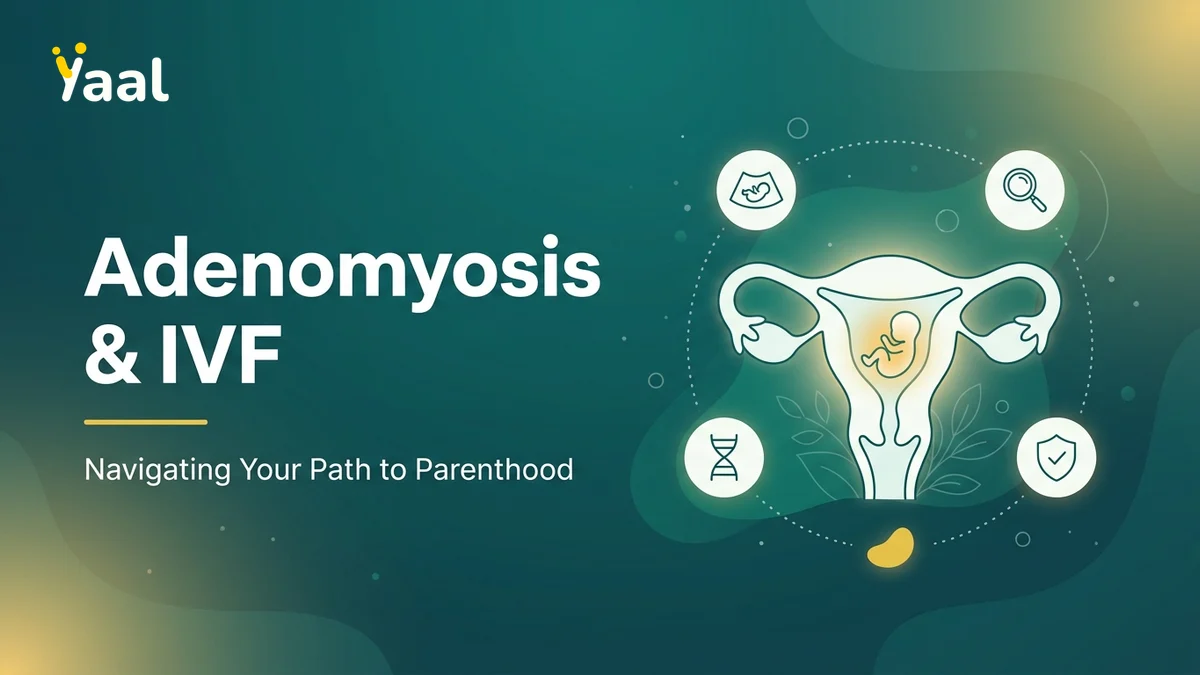
While endometriosis involves endometrial-like tissue growing outside the uterus, adenomyosis occurs when this same tissue misplaces itself and invades the myometrium—the thick, muscular wall of the uterus itself.
[Endometrium: Inner Lining] ---> Invades Muscular Wall ---> [Adenomyosis]
[Endometrium: Inner Lining] ---> Grows Outside Uterus ---> [Endometriosis]
When a woman suffers from both conditions simultaneously, her fertility challenges are compounded. While endometriosis primarily targets egg quality, tubal function, and the pelvic environment, adenomyosis directly compromises the structure and receptivity of the uterine wall. The uterine muscle becomes enlarged, inflamed, and less capable of supporting the normal vascular changes required for embryo implantation, which can lead to higher rates of early pregnancy loss.
When to See a Fertility Specialist for Pelvic Pain
Persistent pelvic pain should never be dismissed as "normal period cramps." You should seek an early evaluation with a fertility specialist if you experience:
- Severe, throbbing menstrual cramps (dysmenorrhea) that do not respond to over-the-counter pain relievers.
- Chronic pelvic pain that persists throughout the month, outside of your menstrual cycle.
- Deep pelvic pain during or after sexual intercourse (dyspareunia).
- Painful bowel movements or pain during urination, especially during your period.
Historically, the medical community relied almost exclusively on invasive diagnostic laparoscopy to confirm endometriosis, often causing patients to wait seven to ten years for a definitive diagnosis. Today, expert fertility specialists advocate for early clinical screening. High-resolution, specialized transvaginal 3D ultrasound and pelvic MRI can identify deep infiltrating lesions, ovarian endometriomas, and adenomyosis non-invasively, allowing for the timely implementation of a fertility-preservation plan.
Natural Conception vs. IUI vs. IVF with Endometriosis
Choosing the right treatment path depends heavily on your age, the stage of your disease, your ovarian reserve, and how long you have been trying to conceive.
Is IUI Effective for Endometriosis Patients?
Intrauterine Insemination (IUI)—where washed sperm is placed directly into the uterus around the time of ovulation—is sometimes considered for mild cases of endometriosis (Stages I and II). However, for IUI to be successful, at least one fallopian tube must be completely open and free of restrictive scar tissue.
For patients with moderate-to-severe endometriosis (Stages III and IV), the success rates of IUI are very low. Because IUI still relies on the fallopian tube to pick up the egg and requires the fertilizing event to take place within a potentially inflamed pelvic cavity, it does not address the core anatomical and biochemical barriers presented by advanced endometriosis. Spending valuable time on repeated, unsuccessful IUI cycles can deplete a woman's remaining ovarian reserve, particularly if her AMH levels are already declining.
Why IVF Offers the Highest Success Rates
In Vitro Fertilization (IVF) is widely recognized as the most effective treatment pathway for moderate-to-severe endometriosis. By extracting the eggs directly from the ovaries and fertilizing them with sperm in a highly controlled embryology laboratory, IVF entirely bypasses the damaged, scarred, or blocked pelvic anatomy.
[Ovary] ---> (Direct Egg Retrieval) ---> [Embryology Lab] ---> [Embryo Transfer] ---> [Uterus]
 *Bypasses Blocked Fallopian Tubes & Pelvic Inflammation*
Furthermore, customized IVF protocols can be designed to overcome the specific challenges of endometriosis:
- ICSI (Intracytoplasmic Sperm Injection): Bypasses any poor egg-binding capability caused by inflammatory fluid by injecting a single healthy sperm directly into the egg.
- Downregulation Protocols: Utilizing GnRH agonists for several weeks or months before an embryo transfer temporarily suppresses estrogen production. This "quiets" the active endometriosis and adenomyosis lesions, significantly reducing uterine inflammation and restoring endometrial receptivity.
- Segmented Cycles (Freeze-All): Freezing the resulting high-quality embryos allows the body time to recover from ovarian stimulation. The embryos can then be transferred during a subsequent, carefully prepared cycle where the uterine lining is optimized and free from the inflammatory effects of active disease.
Surgery Before IVF: When Does Laparoscopy Help?
One of the most debated topics in reproductive medicine is whether a patient should undergo laparoscopic surgery to remove endometriosis lesions before starting an IVF cycle.
The Impact of Ovarian Surgery on Your Egg Reserve
While removing painful lesions or cysts sounds logical, surgical intervention on the ovaries carries a significant risk. Ovarian endometriomas are tightly adhered to the healthy, underlying ovarian tissue. When a surgeon peels or excises the cyst wall (cystectomy), a portion of healthy primordial follicles is inevitably removed or damaged by the heat tools used to control bleeding.
This can result in a sharp, irreversible drop in the patient's ovarian reserve, marked by a post-operative decline in AMH levels. For women who already have a low egg count, aggressive surgery can occasionally lead to premature ovarian insufficiency, making future egg retrieval extremely difficult.
Guidelines for Choosing Surgery vs. Immediate IVF
To protect your fertility, the decision between surgery and immediate IVF must be highly personalized:
- When to Choose Immediate IVF (Bypassing Surgery):
- If your primary goal is pregnancy, your ovarian reserve is already low (low AMH/low antral follicle count), and you are over the age of 35.
- If your pelvic pain is manageable.
- If the endometriomas are small (typically under 4 cm) and do not block safe access to your follicles during egg retrieval.
- When Surgery (Conservative Laparoscopy) is Indicated:
- If you suffer from severe, debilitating pain that severely compromises your quality of life.
- If you have very large endometriomas (typically over 5–6 cm) that carry a risk of rupture or infection, or physically block the specialist from safely retrieving eggs.
- If there is a fluid-filled, blocked fallopian tube (hydrosalpinx). Toxic fluid from a hydrosalpinx can flow backward into the uterus, cutting IVF implantation rates in half; surgically removing or clipping this tube before embryo transfer is highly recommended.
If surgery is deemed necessary, it must be performed using a conservative, fertility-preserving approach by an experienced reproductive surgeon who prioritizes protecting the healthy surrounding ovarian tissue.
Navigating Endometriosis and Fertility Care in Chennai
Managing endometriosis-related infertility requires more than standard, one-size-fits-all fertility treatments. It demands a specialized, multidisciplinary approach that combines advanced reproductive endocrinology with deep clinical empathy.
Specialist Care at Yaal Fertility Centre
At Yaal Fertility Centre | Fertility & Women's Health, Chennai, patients benefit from a dedicated team that understands the complex cellular and anatomical nuances of endometriosis. Led by Dr. Rukkayal Fathima, MRCOG (UK), the centre combines international clinical standards with a deeply compassionate, patient-centric philosophy.
Dr. Rukkayal Fathima's extensive training in the United Kingdom and her specialized expertise in complex pelvic environments allow her to design highly individualized treatment plans. Rather than rushing patients into aggressive surgeries that might compromise their ovarian reserve, the team focuses on strategic, step-by-step fertility preservation and optimized IVF protocols tailored to each patient's unique ovarian reserve and disease stage.
Advanced Diagnostics and Tailored Protocols in Chennai
Located in the heart of Chennai, Yaal Fertility Centre is equipped with state-of-the-art diagnostic and laboratory technologies designed to manage complex fertility cases:
- High-Resolution 3D Ultrasound: Allows for the non-invasive mapping of deep infiltrating endometriosis and adenomyosis, eliminating unnecessary diagnostic surgeries.
- Advanced Embryology Lab: Features cutting-edge incubator systems and ICSI technology to cultivate and protect delicate embryos derived from patients with compromised egg quality.
- Tailored Downregulation Protocols: Customized medical preparation cycles designed to suppress pelvic inflammation and maximize uterine receptivity prior to embryo transfer, contributing to the centre's outstanding 70% IVF success rate.
By choosing a local, specialized clinic in Chennai, patients also eliminate the logistical stress of long-distance travel. Managing frequent monitoring appointments, blood tests, and egg retrievals in a supportive, nearby environment greatly reduces the emotional and physical burden of fertility treatment.
Frequently Asked Questions About Endometriosis and Fertility
Can I get pregnant naturally with Stage IV endometriosis?
While Stage IV endometriosis significantly reduces the odds of natural conception due to severe pelvic adhesions and blocked fallopian tubes, it does not make pregnancy impossible. However, because the natural conception rate is very low in these cases, consulting a fertility specialist early to explore advanced options like IVF is highly recommended to avoid losing valuable time.
Does pregnancy cure endometriosis?
Pregnancy does not cure endometriosis, but it can temporarily suppress its symptoms. The high levels of progesterone produced during pregnancy naturally suppress estrogen, which often causes endometrial lesions to shrink and quiet down. However, symptoms typically return after childbirth and the resumption of regular menstrual cycles.
How does an endometrioma (chocolate cyst) affect my IVF cycle?
An endometrioma can reduce the number of healthy eggs available in that ovary and may make egg retrieval technically challenging if the cyst is very large. However, experienced specialists can safely navigate around smaller cysts during retrieval, and having an endometrioma does not mean your IVF cycle cannot succeed.
Will treating my endometriosis improve my chances of IVF success?
Yes. Using medical downregulation (such as GnRH agonists) to temporarily suppress active endometriosis and adenomyosis before an embryo transfer dramatically reduces pelvic inflammation. This restores uterine receptivity and significantly improves your overall IVF success and implantation rates.
Take Control of Your Fertility Journey
While endometriosis introduces unique physical and emotional hurdles to your path to parenthood, it is a challenge that can be successfully managed. With the support of advanced reproductive technologies, highly customized medical protocols, and experienced specialists, a successful and healthy pregnancy is a realistic and highly achievable goal.
Early intervention is the key to preserving your options and protecting your ovarian reserve. If you are struggling to conceive or have been diagnosed with endometriosis, do not wait to seek expert guidance.
To explore your options and receive a personalized, compassionate fertility assessment, schedule a consultation with Dr. Rukkayal Fathima.
Frequently Asked Questions
Written by
Dr. Rukkayal Fathima
Specialist at Yaal Fertility Centre, Chennai. Providing expert guidance on fertility and women's health.