What is PCOS?
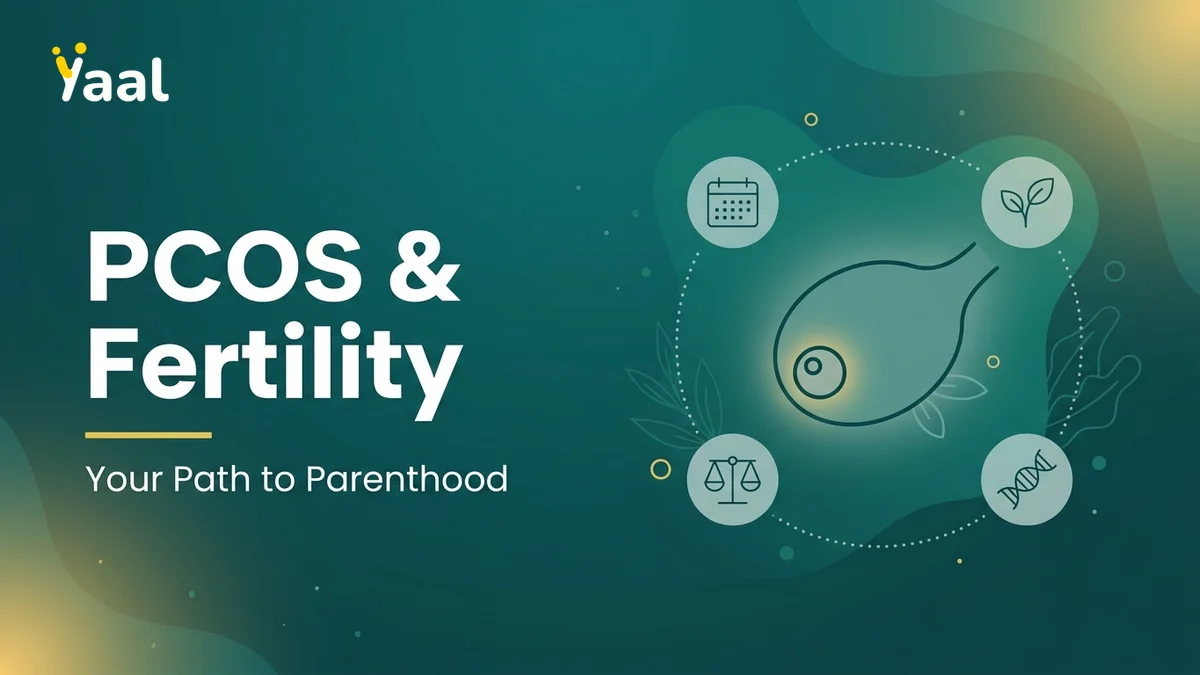
Polycystic Ovary Syndrome (PCOS) is one of the most common hormonal disorders affecting women of reproductive age, impacting approximately 1 in 10 women worldwide. In India, the prevalence is estimated to be even higher, with studies suggesting 15-20% of women are affected.
PCOS is characterized by a combination of symptoms resulting from hormonal imbalances — particularly elevated androgens (male hormones) and insulin resistance. Despite its name, PCOS does not always involve cysts on the ovaries. The "polycystic" appearance on ultrasound actually represents multiple small, immature follicles that have not developed fully.
The three key diagnostic criteria (at least two of three must be present) are:
- Irregular or absent periods — indicating irregular or no ovulation
- Elevated androgen levels — causing acne, excess hair growth (hirsutism), or hair thinning
- Polycystic ovaries on ultrasound — 12 or more small follicles in one or both ovaries
How PCOS Affects Fertility
PCOS is one of the leading causes of female infertility, but the good news is that it is also one of the most treatable. The primary way PCOS affects fertility is through anovulation — the failure to release an egg regularly.
In a normal menstrual cycle, the pituitary gland releases follicle-stimulating hormone (FSH) and luteinizing hormone (LH) in a carefully timed sequence. FSH stimulates follicle growth, and an LH surge triggers ovulation. In PCOS, this hormonal balance is disrupted:
- Elevated LH levels relative to FSH interfere with normal follicle development
- Excess androgens suppress follicle maturation, leading to multiple small follicles that stall before reaching ovulation
- Insulin resistance (present in 50-70% of women with PCOS) exacerbates androgen production and further disrupts the ovulatory cycle
The result is that many women with PCOS have irregular, infrequent, or absent periods — each representing a missed opportunity for conception.
Other fertility impacts of PCOS include:
- Reduced egg quality due to prolonged exposure to elevated androgens
- Thickened endometrium (uterine lining) that may not be optimally receptive to embryo implantation
- Higher risk of early miscarriage (some studies suggest 30-40% miscarriage rates in untreated PCOS)
- Increased risk of gestational diabetes and pregnancy complications
Diagnosing PCOS

If you suspect you have PCOS, a comprehensive evaluation at Yaal Fertility Centre includes:
- Detailed medical history — menstrual regularity, weight changes, acne, hair growth patterns
- Physical examination — BMI, signs of androgen excess, acanthosis nigricans (darkened skin patches indicating insulin resistance)
- Blood tests — FSH, LH, testosterone, DHEA-S, fasting insulin and glucose, thyroid function, prolactin, AMH
- Pelvic ultrasound — to assess ovarian morphology and endometrial thickness
It is important to exclude other conditions that can mimic PCOS, including thyroid disorders, congenital adrenal hyperplasia, and hyperprolactinemia.
Treatment Options for PCOS-Related Infertility
Treatment for PCOS-related infertility follows a stepwise approach, starting with the least invasive options:
Step 1: Lifestyle Modifications
For overweight or obese women with PCOS, lifestyle changes are the foundation of treatment. Even a modest weight loss of 5-10% of body weight can:
- Restore regular ovulation in up to 50% of women
- Improve insulin sensitivity
- Reduce androgen levels
- Improve response to fertility medications
- Reduce pregnancy complication risks
Recommended lifestyle changes include:
- A balanced, low-glycemic-index diet rich in whole grains, vegetables, lean proteins, and healthy fats
- Regular moderate exercise — 150 minutes per week of brisk walking, swimming, or cycling
- Stress management — mindfulness, yoga, or counselling
- Adequate sleep (7-8 hours per night)
- Supplements as recommended by your doctor — inositol, vitamin D, and folic acid have shown benefits in PCOS
Step 2: Ovulation Induction
If lifestyle changes alone do not restore regular ovulation within 3-6 months, the next step is medical ovulation induction:
Letrozole (Femara): Currently the first-line medication for ovulation induction in PCOS. Letrozole is an aromatase inhibitor that stimulates the ovary to develop and release one or two mature follicles. It has been shown to produce higher ovulation and pregnancy rates than Clomiphene in women with PCOS.
Clomiphene Citrate (Clomid): The traditional first-line medication, still widely used. It works by blocking estrogen receptors in the brain, causing increased FSH production. Approximately 70-80% of women with PCOS will ovulate with Clomiphene, and about 40% will conceive within 6 cycles.
Gonadotropins (injectable FSH): If oral medications fail, injectable hormones can directly stimulate follicle development. These require careful monitoring with ultrasound to avoid overstimulation and multiple pregnancies.
Step 3: IUI (Intrauterine Insemination)
If ovulation induction alone does not result in pregnancy after 3-6 cycles, the next step is combining ovulation induction with IUI. Washed, concentrated sperm is placed directly into the uterus at the time of ovulation, increasing the chances of fertilization.
IUI with ovulation induction has success rates of approximately 15-20% per cycle for women with PCOS — higher than ovulation induction alone.
Step 4: IVF (In Vitro Fertilization)
IVF is recommended when:
- Ovulation induction and IUI have failed after an adequate trial (typically 3-6 cycles)
- There are additional infertility factors (tubal issues, significant male factor)
- The woman is over 35 and time is a factor
Women with PCOS often respond well to IVF stimulation, frequently producing a large number of eggs. However, this also increases the risk of OHSS, so protocols are carefully tailored — often using antagonist protocols with GnRH agonist triggers.
IVF success rates for women with PCOS are generally comparable to or slightly higher than age-matched women without PCOS, with per-cycle success rates of 40-60% for women under 35.
Step 5: Ovarian Drilling (Rarely Needed)
Laparoscopic ovarian drilling (LOD) involves making small punctures in the ovary with a laser or electric current to destroy a small amount of androgen-producing tissue. This can restore ovulation in some women who have not responded to medications. It is less commonly used today due to the effectiveness of modern medical treatments.
PCOS, Metformin, and Fertility
Metformin, an insulin-sensitizing medication commonly used for type 2 diabetes, has a role in PCOS management. While metformin alone is not as effective as Letrozole or Clomiphene for ovulation induction, it can be valuable when:
- Combined with ovulation-inducing medications to improve response
- Used in women with significant insulin resistance or prediabetes
- Taken during pregnancy to reduce miscarriage risk and gestational diabetes risk (under specialist guidance)
Your doctor will determine whether metformin is appropriate for your specific situation.
Pregnancy with PCOS: What to Expect
Women with PCOS who become pregnant — whether naturally or through treatment — need careful monitoring. PCOS pregnancies carry a higher risk of:
- Gestational diabetes — approximately 3 times higher risk than non-PCOS pregnancies
- Pregnancy-induced hypertension and preeclampsia — 2-3 times higher risk
- Preterm birth — slightly increased risk
- Cesarean delivery — higher rates due to pregnancy complications
These risks can be significantly reduced with appropriate prenatal care, blood sugar monitoring, weight management, and regular check-ups. At Yaal Fertility Centre, our high-risk pregnancy team works closely with our fertility specialists to ensure continuity of care.
Frequently Asked Questions
Can I get pregnant naturally with PCOS?
Yes, many women with PCOS conceive naturally, especially those with milder forms of the condition. If you have occasional ovulation (even if irregular), natural conception is possible. However, irregular ovulation makes it harder to predict fertile windows and generally takes longer. If you have been trying to conceive for more than 6-12 months without success, consult a fertility specialist.
Does PCOS get worse with age?
The presentation of PCOS can change with age. Some symptoms like acne and irregular periods may improve, while metabolic risks (insulin resistance, diabetes, cardiovascular disease) tend to increase. Fertility naturally declines with age for all women, and PCOS adds an additional layer of complexity. This is why early evaluation and proactive management are important.
Will losing weight cure my PCOS?
PCOS is a lifelong condition that cannot be "cured," but its symptoms can be effectively managed. Weight loss is one of the most powerful interventions — even 5-10% weight loss can restore regular ovulation, improve hormonal balance, and dramatically improve fertility outcomes. Weight management combined with medical treatment provides the best results.
How long does it take to get pregnant with PCOS treatment?
With appropriate treatment, most women with PCOS can expect to conceive within 6 to 12 months. The timeline depends on the treatment approach: ovulation induction alone may take 3-6 cycles, IUI adds another 3-4 cycles if needed, and IVF typically achieves pregnancy within 1-2 cycles. Your fertility specialist will create a personalized timeline based on your specific situation.
Is PCOS hereditary?
PCOS has a strong genetic component. If your mother or sister has PCOS, your risk is significantly higher. However, PCOS is also influenced by environmental factors, lifestyle, and weight. Having a genetic predisposition does not guarantee you will develop PCOS, and lifestyle modifications can reduce its impact even in those with a family history.
Frequently Asked Questions
Written by
Dr. Rukkayal Fathima
Specialist at Yaal Fertility Centre, Chennai. Providing expert guidance on fertility and women's health.