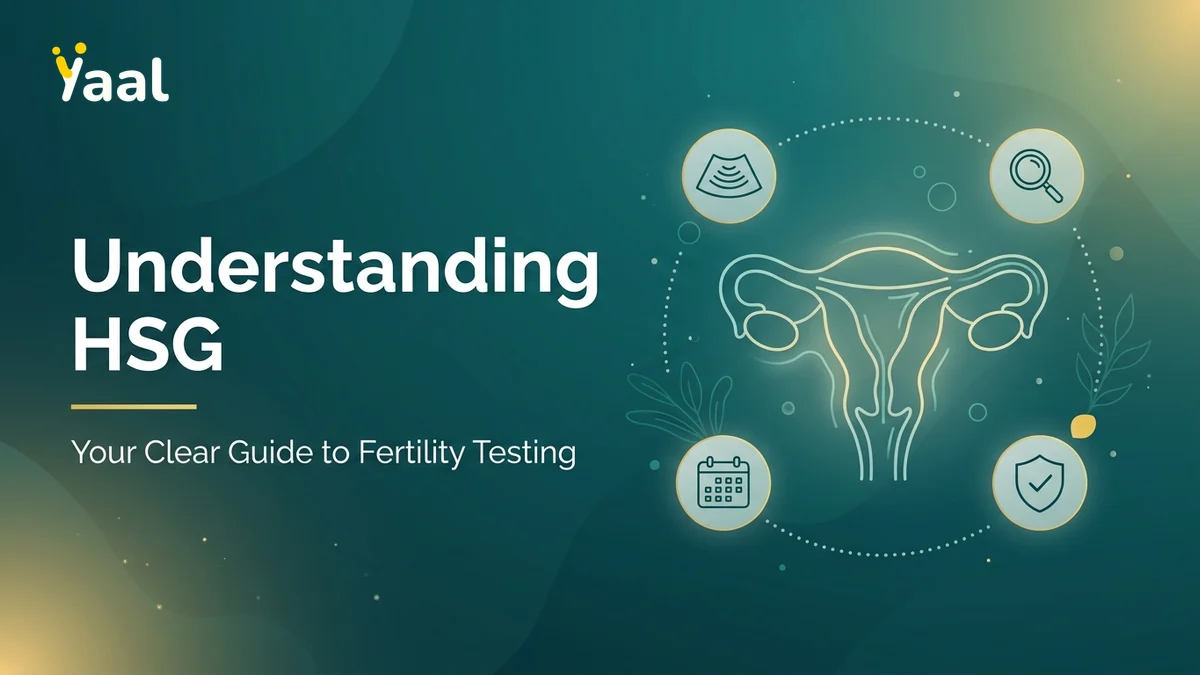
Embarking on a fertility journey can feel overwhelming, especially when faced with a series of diagnostic medical evaluations. Understanding the purpose, process, and implications of an HSG test fertility assessment is a crucial first step toward gaining clarity on your reproductive health. This comprehensive guide demystifies the entire procedure, helping you navigate the pathway to parenthood with confidence and clinical clarity.
What is an HSG Test for Fertility?
A Hysterosalpingography (HSG) is a specialized diagnostic X-ray procedure primarily used to evaluate female fertility. This outpatient imaging test allows reproductive specialists to examine the internal structure of the female reproductive system with high precision. By utilizing a contrast dye and real-time fluoroscopic X-rays, clinicians can clearly view the contours of the uterine cavity and determine whether the pathways leading to the ovaries are clear.
An HSG test fertility evaluation is highly time-sensitive. It is typically scheduled during the first half of the menstrual cycle—specifically between days 7 and 10, after your period has completely ended but before ovulation occurs. This timing is critical for two primary reasons:
- It ensures that the patient is not pregnant during the exposure to X-rays.
- The endometrial lining is at its thinnest during this phase, which allows for clearer, highly accurate imaging of the uterine cavity.
How the HSG Procedure Works
The procedure begins similarly to a routine gynecological exam. A contrast medium containing iodine is gently introduced through the cervix into the uterus. As this liquid flows, a radiologist uses a fluoroscope (a continuous X-ray machine) to capture images.
If the reproductive system is healthy and unobstructed, the liquid will fill the uterine cavity, travel through the fallopian tubes, and spill out naturally into the pelvic cavity, where it is harmlessly reabsorbed by the body. If the liquid meets an obstruction, the X-ray will show exactly where the blockage is located.
Who Needs an HSG Test?
Fertility specialists routinely recommend an HSG test for individuals who have:
- Been actively trying to conceive for over a year (or six months if over the age of 35) without success.
- A history of recurrent miscarriages, which may point to structural uterine anomalies.
- Known risk factors for tubal blockages, such as a history of pelvic infections, ruptured appendix, or abdominal surgeries.
- Plans to undergo intrauterine insemination (IUI) or other assisted reproductive therapies where open tubes are a prerequisite.
Why Checking Fallopian Tube Patency is Crucial for Conception
For natural conception to occur, the biological pathway must be entirely unobstructed. The fallopian tubes are not merely passive conduits; they are dynamic, muscular structures lined with microscopic hair-like projections called cilia. These cilia help sweep the egg from the ovary toward the uterus. Crucially, the fallopian tube is the exact site where fertilization—the meeting of the egg and sperm—takes place.
"Patency" refers to the state of being open and unobstructed. If the fallopian tubes are not patent, sperm cannot reach the egg, and a fertilized embryo cannot travel back down to implant in the uterus. Consequently, checking for tubal patency is one of the most fundamental steps in any comprehensive fertility investigation.
[Ovary] ---> (Egg Released) ---> [Fallopian Tube (Fertilization Site)] ---> [Uterus (Implantation)]
 ^
 (Sperm Meets Egg)
The Difference Between Open and Blocked Tubes
When fallopian tubes are open, sperm can travel upward freely, and the fertilized egg can return to the uterus within a few days. However, when one or both tubes are blocked (known as tubal occlusion), this vital meeting cannot occur.
A blockage can occur at different points along the tube:
- Proximal blockage: Located where the tube meets the uterus.
- Distal blockage: Located at the end near the ovary, often causing the tube to swell with fluid (a condition known as hydrosalpinx).
How Tubal Factor Infertility Impacts Your Journey
Tubal factor infertility accounts for approximately 25% to 30% of all female infertility cases. Common causes of tubal damage or blockage include:
- Pelvic Inflammatory Disease (PID): Often caused by untreated sexually transmitted infections, leading to scarring.
- Endometriosis: Endometrial tissue growing outside the uterus can cause severe inflammation and adhesions that bind the tubes.
- Past Abdominal or Pelvic Surgeries: Procedures for appendicitis, ovarian cysts, or cesarean sections can leave behind scar tissue.
Identifying tubal factor infertility early through an HSG test fertility assessment prevents couples from spending time, emotional energy, and financial resources on treatments like IUI, which cannot succeed if the tubes are structurally blocked.
What to Expect During an HSG Test: Step-by-Step and Pain Levels

Demystifying the step-by-step process of an HSG test is the best way to alleviate the anxiety that many patients experience before their appointment. The entire procedure is performed in an outpatient radiology suite or a specialized fertility clinic and usually takes no more than 15 to 30 minutes.
Step 1: Preparation & Positioning (Similar to a Pap smear)
 │
 ▼
Step 2: Speculum Insertion & Sanitization of the Cervix
 │
 ▼
Step 3: Catheter Placement (A thin tube is guided into the cervix)
 │
 ▼
Step 4: Contrast Dye Injection (Slowly filling the uterus and tubes)
 │
 ▼
Step 5: Active X-Ray Imaging (Fluoroscopy captures real-time flow)
 │
 ▼
Step 6: Completion & Brief Recovery (Catheter removed, immediate discharge)
Is an HSG Test Painful?
The most common concern patients have is the level of discomfort associated with the test. It is completely normal to feel anxious, but knowing what to expect can help. Most women describe the sensation as moderate, menstrual-like cramping.
The cramping is typically felt during the injection of the contrast dye as the uterus temporarily stretches. This sensation is brief, usually lasting only 1 to 2 minutes during the active imaging phase, and subsides rapidly once the catheter is removed. Some women experience mild cramping or light spotting for a few hours after the procedure, but most can return to their normal daily activities immediately.
How to Prepare for Your Appointment
To ensure the procedure goes smoothly and comfortably, consider the following preparation steps:
- Pre-medication: With your doctor's approval, taking a mild over-the-counter pain reliever (such as ibuprofen) 30 to 60 minutes before the procedure can significantly minimize cramping.
- Comfortable Clothing: Wear loose, comfortable clothing, as you will need to change into a medical gown.
- Bring a Companion: While not strictly mandatory, having a partner or friend drive you home can provide emotional support and physical comfort.
- Post-Procedure Care: Pack a sanitary pad in your bag, as some contrast dye and minor spotting may leak out after the test. Avoid using tampons immediately after the procedure.
HSG vs. SIS vs. Laparoscopy: Which Fertility Test Do You Need?
When exploring reproductive health diagnostics at a specialized Yaal Fertility Centre | Fertility & Women's Health, Chennai, you may encounter various diagnostic terms. While HSG, SIS, and laparoscopy all evaluate reproductive anatomy, they serve distinct purposes and are used complementarily rather than interchangeably.
| Diagnostic Test | Primary Technology Used | Best Evaluates | Invasiveness |
|---|---|---|---|
| HSG (Hysterosalpingography) | X-ray & Iodine Contrast Dye | Fallopian tube patency & general uterine shape | Minimally invasive (outpatient) |
| SIS (Saline Infusion Sonography) | Ultrasound & Sterile Saline | Detailed uterine cavity lining, polyps, and fibroids | Minimally invasive (outpatient) |
| Diagnostic Laparoscopy | Surgical Camera (Endoscope) | Direct visualization of pelvic organs, adhesions, endometriosis | Minimally invasive surgery (general anesthesia) |
HSG vs. Saline Infusion Sonography (SIS)
Saline Infusion Sonography (SIS), also known as a water scan or hydrosonography, utilizes sterile saline and high-resolution ultrasound waves instead of X-rays. Because saline does not show up on X-rays, SIS is primarily designed to look closely at the endometrium (uterine lining) to detect structural abnormalities like polyps, fibroids, or congenital uterine septums. While some advanced variations of ultrasound can check tubes, the standard HSG remains the gold standard for verifying complete fallopian tube patency.
When is Diagnostic Laparoscopy Recommended?
Diagnostic laparoscopy is a surgical procedure performed under general anesthesia. A specialist inserts a small camera through a tiny incision in the abdomen to directly view the ovaries, uterus, and outer surface of the fallopian tubes.
Laparoscopy is recommended when a patient has chronic pelvic pain, suspected severe endometriosis, or when an HSG test suggests a blockage that might be surgically repairable. Unlike HSG and SIS, laparoscopy allows the surgeon to both diagnose and treat issues (such as removing scar tissue or ovarian cysts) during the same procedure.
Next Steps After an Abnormal HSG Test Result
Receiving abnormal results from an HSG test fertility evaluation can be emotionally challenging, but it is a vital step toward finding a targeted solution. An abnormal result typically indicates either a uterine structural anomaly or a tubal blockage.
 [ Abnormal HSG Result ]
 │
 ┌────────────────┴────────────────┐
 ▼ ▼
 [ Unilateral Blockage ] [ Bilateral Blockage ]
 │ │
 (One tube open) (Both tubes blocked)
 │ │
 - Consider natural conception - IVF (Highly successful)
 - Superovulation + IUI - Surgical repair (Selected cases)
Treatment Options for Blocked Fallopian Tubes
If your results show a blockage, your next steps will depend on where the blockage is and whether it affects one or both tubes:
- Unilateral Blockage (One-sided): If only one fallopian tube is blocked, natural conception is still entirely possible, as the healthy tube can still collect an egg. Your specialist may recommend timed intercourse or intrauterine insemination (IUI) combined with mild ovulation induction.
- Bilateral Blockage (Both sides): When both tubes are blocked, sperm and egg cannot meet naturally. In these cases, your reproductive endocrinologist will discuss advanced fertility treatments.
Why IVF Bypasses Tubal Blockages Successfully
In Vitro Fertilization (IVF) is the most successful and direct treatment path for bilateral tubal blockages. Because the fallopian tubes are entirely bypassed during IVF, their functional status becomes irrelevant to your success.
In an IVF cycle, the ovaries are stimulated to produce multiple eggs, which are then retrieved directly from the ovaries using a minor, ultrasound-guided procedure. These eggs are fertilized with sperm in a controlled laboratory environment. The resulting healthy embryo is then transferred directly into the uterine cavity for implantation.
Getting an HSG Test in Chennai: Choosing the Right Care
When undergoing diagnostic fertility testing, where you choose to have your procedure performed matters. Because the accuracy of an HSG test relies heavily on the skill of the provider and the quality of the imaging equipment, choosing an experienced clinical team ensures both diagnostic accuracy and physical comfort.
What to Look for in a Fertility Clinic
For patients seeking fertility care, it is ideal to select a facility that combines diagnostic imaging and advanced reproductive treatments under one roof. This integrated approach ensures that your diagnostic results are immediately interpreted by your primary fertility specialist, preventing communication delays and streamlining your treatment timeline.
Key factors to consider include:
- The presence of highly qualified reproductive endocrinologists and gynecologists.
- Modern, well-maintained imaging suites designed for patient comfort.
- A supportive, empathetic nursing team to assist you before and after the procedure.
Comprehensive Diagnostic Services at Yaal Fertility Centre
Located in the heart of Chennai at Poonamallee High Road, Yaal Fertility Centre is a premier facility dedicated to reproductive health and fertility diagnostics. Led by Dr. Rukkayal Fathima, MRCOG (UK), our clinic brings international clinical standards and compassionate, patient-first care to every individual we serve.
At Yaal Fertility Centre, we recognize that diagnostic tests can cause anxiety. Our dedicated team takes the time to explain every step of the HSG process, ensuring you feel safe, informed, and comfortable. Should your HSG results indicate a tubal factor or uterine issue, our clinic is equipped with advanced technology to transition you seamlessly into personalized treatments—including IUI, laparoscopy, or IVF, where we proudly maintain an exceptional 70% IVF success rate.
Frequently Asked Questions About the HSG Test for Fertility
Does an HSG test increase the chances of getting pregnant?
Yes, many clinical studies have shown a slight increase in natural pregnancy rates during the first three months following an HSG test. This is often referred to as the "tubal flushing" effect. The contrast dye gently clears out minor mucus plugs or debris within the fallopian tubes, opening up the pathway for sperm and egg.
How long does the HSG procedure take?
The active imaging portion of the test takes only about 5 to 10 minutes. However, you should plan to be at the clinic for approximately 45 minutes to an hour to allow time for registration, preparation, and a brief recovery period immediately after the test.
Are there any side effects or risks associated with an HSG?
An HSG is generally very safe. Common, mild side effects include light vaginal spotting, mild lower abdominal cramping, and slight dizziness for a short time after the procedure. Rare risks include pelvic infection or an allergic reaction to the iodine contrast dye, both of which are carefully screened for and managed by our medical team.
Can I drive myself home after the test?
Most women are fully capable of driving themselves home after an HSG test, as no sedation is used. However, if you tend to experience strong menstrual cramps or feel anxious, having a family member or friend accompany you is highly recommended for your comfort.
Taking the Next Step in Your Fertility Journey
Undergoing fertility diagnostics is an empowering first step toward finding answers. An HSG test provides invaluable anatomical insights, helping your clinical team design a highly personalized pathway toward a successful pregnancy. Rather than a source of worry, diagnostic testing is a tool of clarity that brings you closer to your goal of building a family.
If you are ready to begin your evaluations or seek a second opinion on your fertility health, the dedicated specialists at Yaal Fertility Centre are here to guide you with clinical excellence and warm, individualized care.
To schedule your diagnostic evaluation or to consult with Dr. Rukkayal Fathima, Book an appointment with Yaal Fertility Centre.
Frequently Asked Questions
Written by
Dr. Rukkayal Fathima
Specialist at Yaal Fertility Centre, Chennai. Providing expert guidance on fertility and women's health.