

FertilityDiagnostics
Carrier Screening for Couples: Who Needs It and Why
Carrier screening is a blood test that shows if you silently carry a gene for an inherited condition. It matters when both partners carry the same one.
Dr. Rukkayal Fathima
Expert articles about Diagnostics from our specialists.
Carrier screening is a blood test that shows if you silently carry a gene for an inherited condition. It matters when both partners carry the same one.

A sperm DNA fragmentation (DFI) test shows how many sperm carry broken DNA. High levels can follow heat, smoking or varicocele and are often treatable.

Does blood group compatibility for marriage matter? ABO groups don't; the Rh factor does, and Anti-D injections manage it. What to test before marriage.

Consanguineous marriage means marrying a blood relative, such as a cousin or maternal uncle. See the real genetic risk, the Tamil term, and how screening helps.

Is a fertility test before marriage worth it? Who benefits, which tests for her (AMH, scan) and him (semen analysis), and what results can and can't tell you.

A thalassemia test before marriage shows if you carry the trait. How CBC and Hb HPLC work, what results mean, and the options if both partners are carriers.

The AZF microdeletion test is a blood test for missing Y chromosome genes in men with zero or very low sperm. AZFc often still has sperm; AZFa/b usually not.

What causes blocked fallopian tubes, how HSG finds them, whether you can conceive with one blocked tube, and when surgery or IVF gives the best chance.
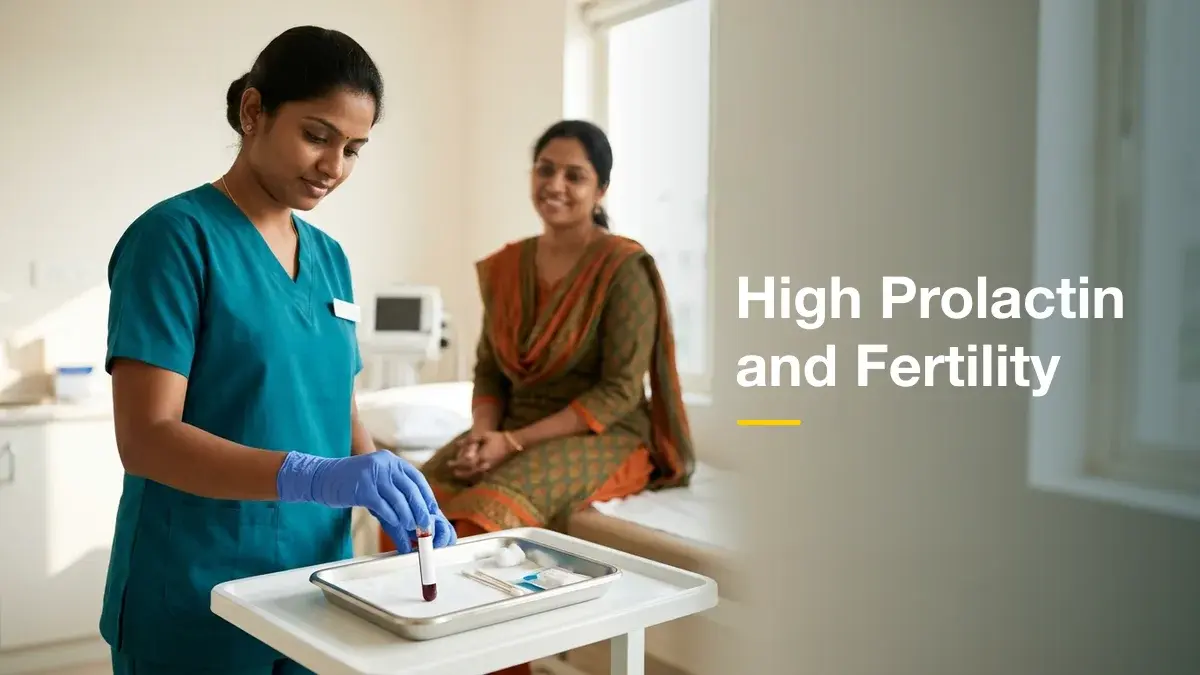
Understand hyperprolactinemia: its symptoms like irregular periods, causes like prolactinoma, and how treatments restore ovulation and fertility.
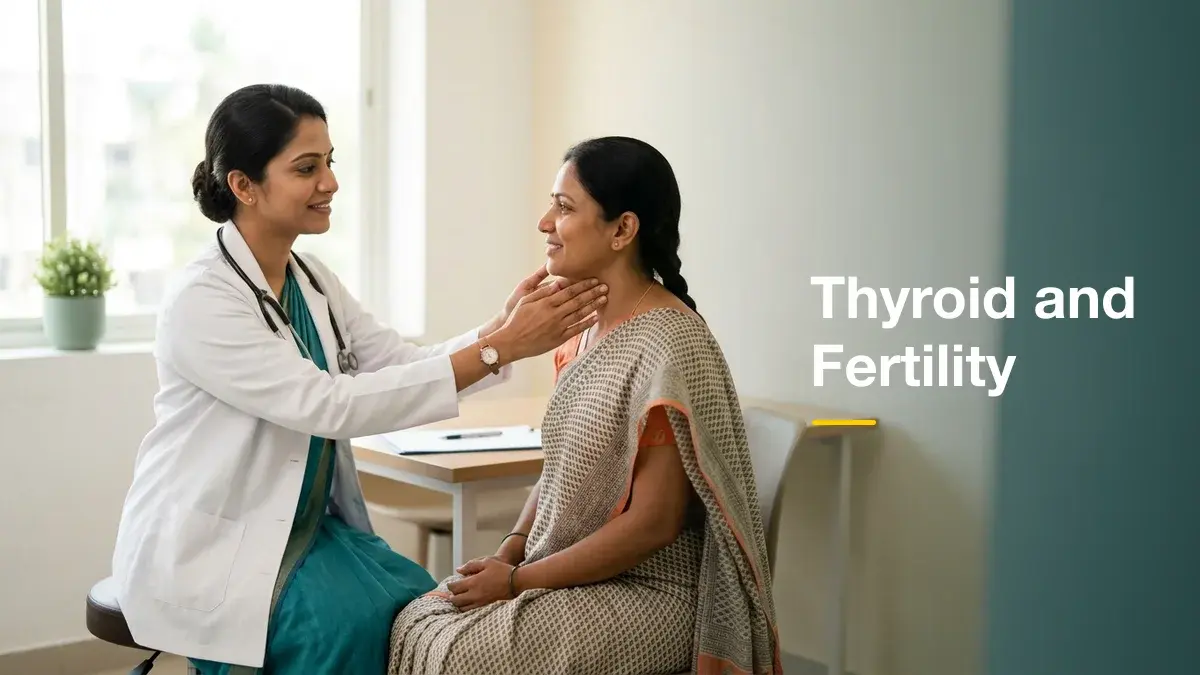
Understand how thyroid disorders affect ovulation, TSH levels for IVF, and miscarriage risks. Learn about treatments to optimize your fertility.

Learn how uterine fibroids affect conception, pregnancy, and IVF success. Discover symptoms, diagnosis, and advanced fertility preservation options.

Discover how uterine polyps affect embryo implantation and fertility. Learn about symptoms, hysteroscopic removal, recovery timelines, and IVF success.

An anteverted uterus tilts forward toward the bladder. It is the most common, normal position and does not affect pregnancy. See normal size and the layers.

Klinefelter syndrome (47,XXY) means a man has an extra X chromosome. It often shows up as zero sperm, yet micro-TESE finds sperm for ICSI in about half of men.

A follicular study is a series of vaginal scans from about day 8–10 that tracks an egg growing to 18–22 mm and confirms ovulation. See timing and report terms.

Preparing for your first fertility consultation? Learn what medical history to bring, questions to ask, and how our Chennai specialists build your plan.
Discover what happens during a female fertility evaluation. Learn about hormone panels, pelvic ultrasounds, HSG, and how results guide your treatment plan.
Understand the AMH test for ovarian reserve. Learn about normal ranges by age, low vs. high AMH levels, and how it impacts your IVF or IUI success.

Is the HSG test painful? Most women feel period-like cramps for a few minutes. See how it is done, how long it takes, and what to do after your result.
Learn how hysteroscopy for fertility detects and treats uterine issues like polyps and fibroids to significantly improve your IVF success rates.
Laparoscopy for fertility finds and treats endometriosis, blocked tubes and PCOS in one keyhole surgery; most women go home the same day and rest for 3-7 days.