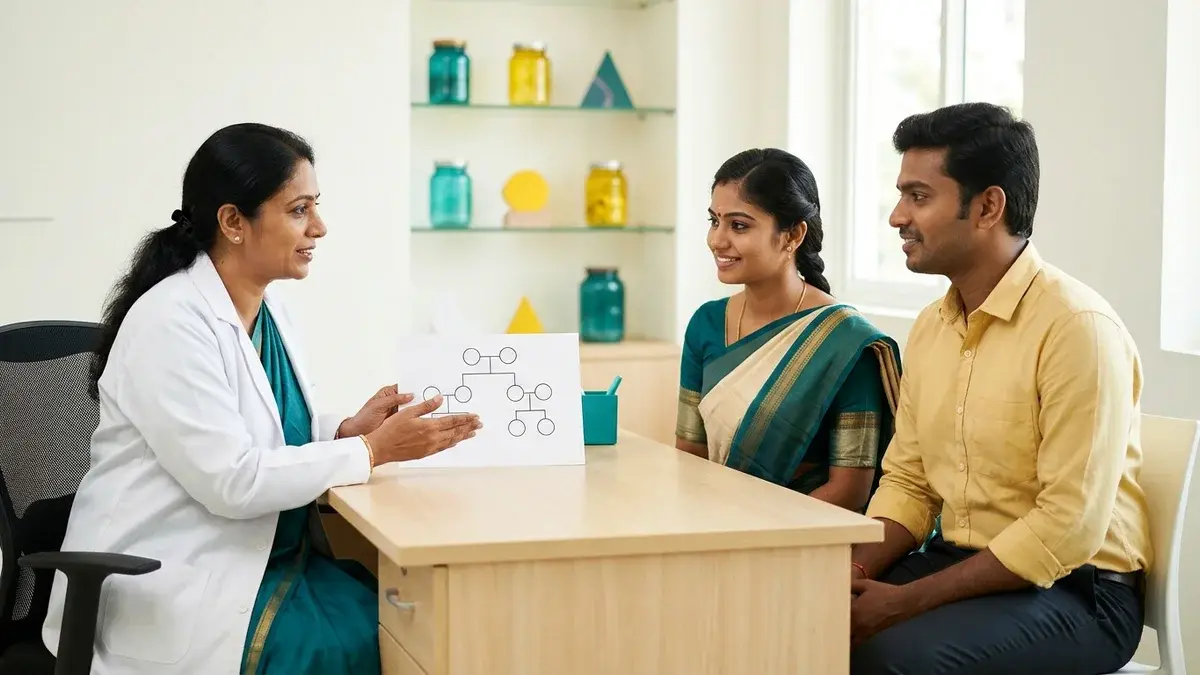

A fertility test before marriage is optional. It is not a test of whether someone is fit to marry, and most couples do not need one. For some, though, a simple baseline helps them plan: an AMH blood test and pelvic ultrasound for her and a semen analysis for him. At Yaal Fertility Centre in Chennai, Dr. Rukkayal Fathima and our team offer these as an optional part of the premarital health checkup, in confidence and only when the couple wants them.
Should You Get a Fertility Test Before Marriage?
For most young couples with no symptoms, the answer is: it isn't necessary. The usual premarital checkup covers what matters most before marriage, such as Rh status, thalassaemia carrier status and infections.
When a Baseline Is Genuinely Useful
A fertility test makes sense when there is a reason to look: a known condition, a risk factor in your history, or a plan to marry later or start a family soon after marriage. In those cases, knowing early lets you plan your timeline, rather than finding out after a year of trying.
A Baseline Is Not an Infertility Work-Up
A premarital fertility test is a snapshot, not a diagnosis. Infertility is investigated only when a couple has been trying to conceive for 6 to 12 months without success, and that work-up is more detailed. For what a full evaluation involves, see our guide to female fertility tests.
Who Benefits Most From a Fertility Check Before Marriage?
For Women
Consider a baseline if any of these apply:
- Age: you are marrying at 32 or older, when egg reserve declines faster.
- Irregular periods: cycles regularly shorter than 21 days, longer than 35 days, or absent, or a diagnosis of PCOS.
- Very painful periods or pelvic pain, which can point to endometriosis.
- Past ovarian surgery or cysts, or a thyroid disorder.
- Family history of early menopause (a mother or sister before 40).
For Men
A semen analysis is worth considering with a history of:
- Mumps that affected the testicles (orchitis) after puberty.
- Undescended testes, hernia surgery or a varicocele.
- Injury or surgery to the testicles, or past cancer treatment.
- Heavy smoking, or long exposure to heat or chemicals at work.
For Couples
Couples who plan to try for a baby soon after marriage, or who want to delay a pregnancy for several years, may also find a baseline helpful when deciding their timeline.
Which Fertility Tests Are Done for Her?
AMH and Antral Follicle Count
Anti-Müllerian hormone (AMH) is a blood test that estimates egg reserve, meaning the number of eggs remaining. It can be done on any day of the cycle. A pelvic ultrasound adds an antral follicle count (AFC), a count of small resting follicles in both ovaries, which cross-checks the AMH. Read more about the AMH test and what the numbers mean.
Hormones and the Uterus
- Day 2–3 hormones: FSH, LH and estradiol, which show how the ovaries and pituitary are signalling.
- TSH and prolactin: thyroid and prolactin imbalances are common, easily treated causes of irregular ovulation.
- Ultrasound of the uterus and ovaries: checks the lining and looks for fibroids, cysts or signs of PCOS.
Why HSG Is Not a Premarital Test
The HSG, an X-ray dye test that checks whether the fallopian tubes are open, is not part of premarital screening. It involves passing fluid through the cervix and is done only when a couple has been trying without success. Read about the HSG test and when it is needed.
Which Fertility Test Is Done for Him?
Semen Analysis
A semen analysis measures sperm count, movement (motility) and shape (morphology), and compares them with WHO reference values. Our guide to reading a semen analysis report explains each value and the normal ranges.
How to Prepare, and Why One Result Isn't Final
Avoid ejaculation for 2 to 5 days before giving the sample. Sperm take around two and a half months to develop, and counts vary with fever, stress or heat, so a single abnormal result is never a diagnosis. It is repeated a few weeks later before any conclusion is drawn. Every Yaal centre has an andrology lab and a private semen collection room.
What Fertility Tests Can and Cannot Tell You
AMH Measures Quantity, Not Quality
AMH tells you roughly how many eggs remain, not how good they are, and it does not predict whether you will conceive naturally in the next year. A young woman with a lowish AMH can still ovulate a good egg every month. A high AMH, often seen with PCOS, does not guarantee regular ovulation.
Normal Results Reassure but Don't Guarantee
Normal results are reassuring, but no test can promise a pregnancy, because conception also depends on the tubes, fertilisation and implantation, which a baseline does not test. An abnormal result is a reason to plan, never a reason to call off a marriage.
Privacy, Pressure and What to Do With Your Results
Results Belong to the Couple
Your results are confidential and belong to you and your partner. Testing should be voluntary, never demanded by families or made a condition of a marriage.
Next Steps if Something Is Found
- Lifestyle: stopping smoking, a healthy weight, regular exercise and less heat exposure can improve sperm quality and ovulation. See how to improve sperm quality naturally.
- Simple treatment: thyroid or prolactin problems usually settle with medication.
- Plan your timeline: with a low egg reserve, trying sooner after marriage may be advised.
- Egg freezing: if reserve is low and pregnancy is some years away, egg freezing can preserve options.
- Specialist care: for a confirmed male factor, our male infertility team can advise.
How Long to Try After Marriage Before Seeing a Specialist
By the Woman's Age
- Under 35: see a specialist after 12 months of regular unprotected intercourse.
- 35 to 39: after 6 months.
- 40 or older: after 3 months, or before you start trying.
See a Specialist Sooner If
- Periods are very irregular or absent.
- There is a history of pelvic infection, endometriosis or pelvic surgery.
- Periods are severely painful.
- The man has had undescended testes, a varicocele or a known low sperm count.
Our guide on when to see a fertility specialist covers these red flags in more detail.
Frequently Asked Questions About Fertility Tests Before Marriage
Can an unmarried woman have a fertility test?
Yes. Any adult woman can have an AMH test, hormone tests and a pelvic ultrasound; marriage is not required. An abdominal scan can be used instead of a vaginal one if preferred.
Is a semen analysis before marriage necessary?
No, it is optional. It is most useful for men with a history of mumps orchitis, undescended testes, varicocele or testicular injury, or for couples who want a baseline before planning a pregnancy.
What is a normal AMH level before marriage?
It depends on age and the lab used. In general, a higher level means a larger egg reserve, and a very high level can suggest PCOS. Your doctor will interpret your result for your age. See our AMH guide for typical ranges.
Can a test tell me if I will get pregnant?
No. Tests measure egg reserve, hormones and sperm, but they cannot test fertilisation or implantation, so no test can guarantee a pregnancy.
Do premarital fertility tests hurt?
No. They are a blood test and an ultrasound for women and a semen sample for men. Invasive tests such as HSG are not part of premarital screening.
Premarital Fertility Testing at Yaal Fertility Centre, Chennai
At Yaal Fertility Centre, premarital and pre-conception care is led by Dr. Rukkayal Fathima, MRCOG (UK), Founder and Director, who has more than 15 years of experience in obstetrics, gynaecology and reproductive medicine. Our team recommends fertility tests only when they will help you plan, and explains your results clearly, together and in confidence.
Premarital screening at Yaal. You can give samples for a premarital checkup at any of our eight centres across Chennai: Kilpauk, Mylapore, Thiruvanmiyur, Pallikaranai, Madipakkam, Red Hills, Velappanchavadi and Tambaram. Every centre has an ultrasound room, an andrology lab and a private counselling room, so you can have the tests and go through your results with Dr. Rukkayal Fathima's team close to home.
Planning your marriage? Read about blood group compatibility, the thalassemia test before marriage and, for related couples, consanguineous marriage. When you are ready, book a consultation with Yaal Fertility Centre.
Written by
Dr. Rukkayal Fathima
Specialist at Yaal Fertility Centre, Chennai. Providing expert guidance on fertility and women's health.