What you eat every day is one of the simplest ways to support sperm health. The right foods to increase sperm count supply the nutrients that developing sperm need and help protect them from damage. This guide explains which nutrients matter, where to find them in everyday South Indian food, and when diet alone is not enough. At Yaal Fertility Centre in Chennai, Dr. Rukkayal Fathima and the team often start men on these food changes alongside a semen analysis.
Watch: Quick Answers From Our Doctors
“Any good news?” Why is it always asked of the woman?
TamilMen planning a baby: a lifestyle checklist
Which foods increase sperm count, and why?
Making sperm needs a steady supply of certain vitamins and minerals. Developing sperm are also easily damaged by unstable molecules called free radicals (oxidative stress), which harm their membranes and DNA. Antioxidant foods help protect them.
Key nutrients for sperm production
- Zinc and selenium: needed for sperm formation, DNA and testosterone production.
- Folate (vitamin B9): helps sperm copy their DNA correctly.
- Vitamins C and E: antioxidants that protect sperm membranes.
- Omega-3 fats: part of the sperm's outer membrane and linked to better movement.
- Lycopene: an antioxidant from tomatoes and red fruits.
How long before diet changes show?
Each sperm takes about 74 days to develop, and then spends a little more time maturing before it is released. So changes you make today show up in a semen analysis about three months later. Consistency matters far more than a few weeks of strict eating.
Where to find these nutrients in everyday food
Using local, affordable foods makes a fertility diet easy to keep up for months.
Zinc and selenium
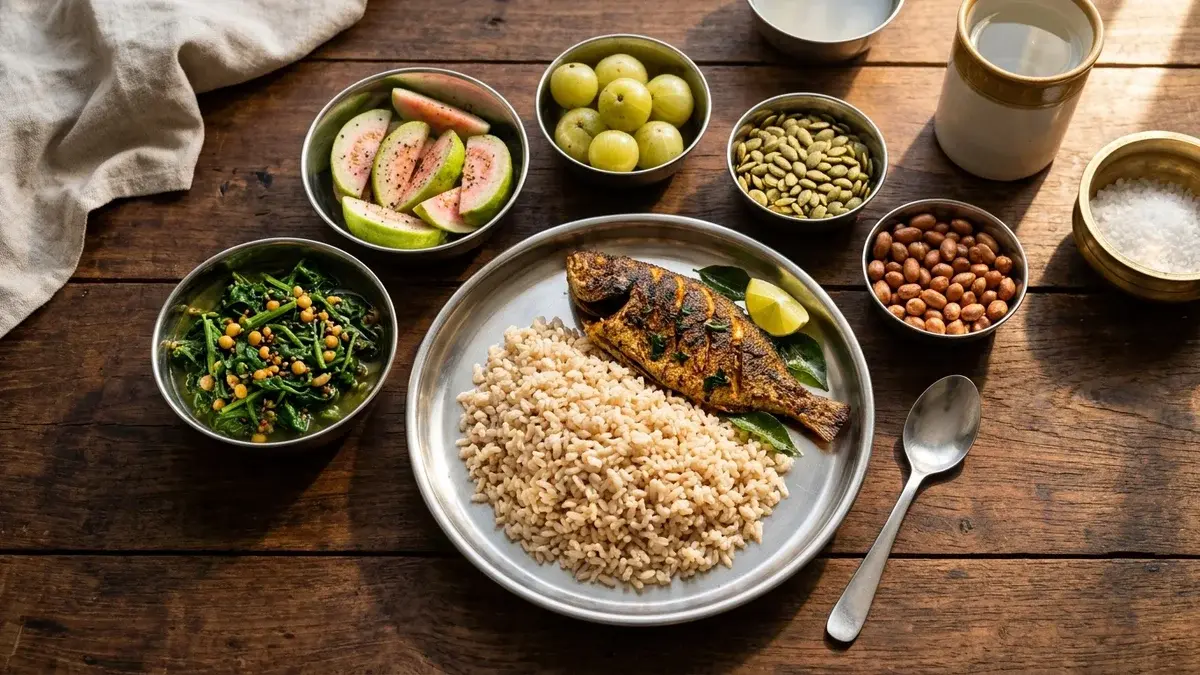
- Pumpkin and sunflower seeds: rich in zinc and healthy fats.
- Groundnuts: an affordable source of protein, zinc and magnesium.
- Eggs: protein, zinc and selenium.
- Fish: mathi (sardines) and ayala (mackerel) provide zinc and selenium.
Sesame seeds and other seafood are also good sources of selenium, which helps form the sperm's tail and supports movement.
Antioxidants and omega-3 fats
Oxidative stress is a common reason for poor sperm movement, which our guide to low sperm motility explains in detail.
| Nutrient | Everyday sources |
|---|---|
| Folate | Keerai (spinach, amaranth), dal, rajma |
| Vitamin C | Amla, guava, oranges |
| Lycopene | Cooked tomatoes, watermelon, papaya |
| Omega-3 fats | Mathi, ayala, walnuts, flaxseed |
Cooking tomatoes, as in rasam or sambar, makes their lycopene easier to absorb. For a wider view of eating for conception for both partners, see our fertility diet guide.
A sample South Indian meal plan for sperm health
These plans show how to build fertility-friendly days from familiar foods. Adjust portions to your weight, activity and any medical advice, especially if you have diabetes.
Vegetarian day
- Early morning: a glass of amla juice without sugar, 5 or 6 soaked almonds and a spoon of pumpkin seeds.
- Breakfast: ragi or oats porridge with walnuts and ground flaxseed, or red rice idli with vegetable sambar.
- Mid-morning: guava slices or pomegranate.
- Lunch: hand-pounded or brown rice, keerai kootu, dal or rajma, and tomato rasam.
- Evening: roasted groundnuts or chana sundal.
- Dinner: phulkas or millet dosai with vegetable kurma and a cucumber and tomato salad.
Non-vegetarian day
- Early morning: a handful of pumpkin and sunflower seeds.
- Breakfast: eggs scrambled with keerai and onion, with red rice idli or whole wheat toast.
- Mid-morning: an orange or a slice of watermelon.
- Lunch: red rice with mathi or ayala fish curry in a light tomato and tamarind base, and vegetable kootu.
- Evening: boiled eggs with pepper, or roasted chana.
- Dinner: grilled chicken or steamed fish with phulkas and greens.
Before changing your diet, a baseline semen analysis shows where you are starting from. Our semen analysis report guide explains the normal ranges.
Foods and habits that can lower sperm count
Cutting out what harms sperm matters as much as adding what helps.
Processed food, trans fats and sugar
Deep-fried snacks, bakery items and ultra-processed foods contain trans fats, which are linked to poorer sperm quality. Sugary drinks and sweets push up insulin, add weight and upset the hormones that drive sperm production.
Whole soy foods such as tofu, eaten in normal amounts, do not appear to harm male fertility. Large amounts of soy protein supplements are best avoided while trying to conceive.
Alcohol, smoking and steroids
- Alcohol: heavy drinking lowers testosterone and the brain hormones (LH and FSH) that drive sperm production.
- Smoking: linked to more sperm DNA damage and poorer movement.
- Steroids and testosterone: gym steroids and testosterone switch off the body's own sperm production, sometimes completely. Our guide to low testosterone and fertility explains why.
How weight and blood sugar affect sperm
Body fat changes how the body handles testosterone, so weight has a direct effect on sperm.
Weight and hormones
Fat tissue contains an enzyme called aromatase, which turns testosterone into oestrogen. Men carrying extra weight, especially around the waist, often have lower testosterone and higher oestrogen, which can reduce sperm production. Poorly controlled diabetes adds oxidative stress and is linked to lower sperm count and movement. Our guide to weight and male fertility covers this in detail.
Practical steps
- Pair carbohydrates with protein and fibre: for example, rice with dal, fish and vegetables, to avoid sugar spikes.
- Drop liquid sugar: swap soft drinks and sweet tea for water, buttermilk or unsweetened amla juice.
- Move every day: about 30 minutes of brisk walking, swimming or cycling. See our guide to exercise to increase sperm count.
- Sleep well: 7 to 8 hours a night, and avoid late-night snacking.
Do you need male fertility supplements?
Many supplements promise big improvements in sperm, but the evidence for general "fertility blends" is mixed.
What the evidence shows
Supplements help most when a man has a confirmed deficiency, such as low vitamin D or zinc. Very high doses of antioxidants can upset the body's natural balance and do not help. Whole foods remain the best everyday source of these nutrients.
| Approach | What to know |
|---|---|
| Whole food diet | Balanced nutrients, safe for long-term use |
| Prescribed supplement | Useful for a confirmed deficiency |
| Over-the-counter "fertility blends" | Mixed evidence, doses vary widely |
| Testosterone boosters and steroids | Can stop sperm production |
The risk of testosterone boosters
Some gym products and "boosters" contain hidden steroids. Extra testosterone tells the brain to stop sending the signals the testes need, which can lead to very low sperm counts or no sperm at all (azoospermia). Recovery after stopping can take many months. Always check with a fertility specialist before taking any supplement while trying to conceive.
Frequently Asked Questions about diet and sperm count
Can diet alone fix a very low sperm count or azoospermia?
No. Diet supports sperm health and can help with mild changes, but a very low count or no sperm usually has a medical cause, such as a blockage, a hormone problem, a varicocele or a genetic factor, which needs a doctor's assessment.
How fast can food improve sperm count?
Expect about three months of consistent changes before a semen analysis shows a difference, because that is how long sperm take to develop and mature.
Are milk and curd good for male fertility?
In moderation, yes. Curd, buttermilk and paneer are good sources of protein and calcium. Keep portions sensible as part of a balanced diet.
Do protein powders lower sperm count?
Plain whey or plant protein powders generally do not. Products that contain prohormones, steroids or testosterone boosters can severely lower sperm count, so check the ingredients carefully.
Should both partners be tested together?
Yes. A male factor plays a part in about half of couples who have difficulty conceiving, and testing both partners together saves time.
When to see a fertility specialist
Good food builds a healthy base, but it cannot open a blocked duct, treat a varicocele or change a genetic cause.
If you have been trying for 12 months, or 6 months if the female partner is over 35, both partners should be assessed. A semen analysis checks sperm count, movement and shape:
- Mild changes can often be supported with diet, lifestyle changes and a repeat test.
- Larger changes may need medical treatment, IUI or ICSI. Our page on low sperm count treatment explains the options, and our guide to ICSI for male infertility explains how a single sperm can be used to fertilise each egg.
Male fertility care at Yaal Fertility Centre in Chennai
At Yaal Fertility Centre, Dr. Rukkayal Fathima, MRCOG (UK), and her team assess both partners together, and pair diet advice with a semen analysis so changes can be measured, not guessed. If the count stays low, the next steps range from treating a hormone problem or varicocele to male infertility treatment with IUI or ICSI.
Every Yaal centre has an andrology lab and a private semen collection room, so the test can be done near home or work: Kilpauk, Mylapore, Thiruvanmiyur, Pallikaranai, Madipakkam, Red Hills, Velappanchavadi or Tambaram. You can also call +91 75500 06704.
To check your sperm health or go through your results, book a consultation with Yaal Fertility Centre.
Written by
Dr. Rukkayal Fathima
Specialist at Yaal Fertility Centre, Chennai. Providing expert guidance on fertility and women's health.