
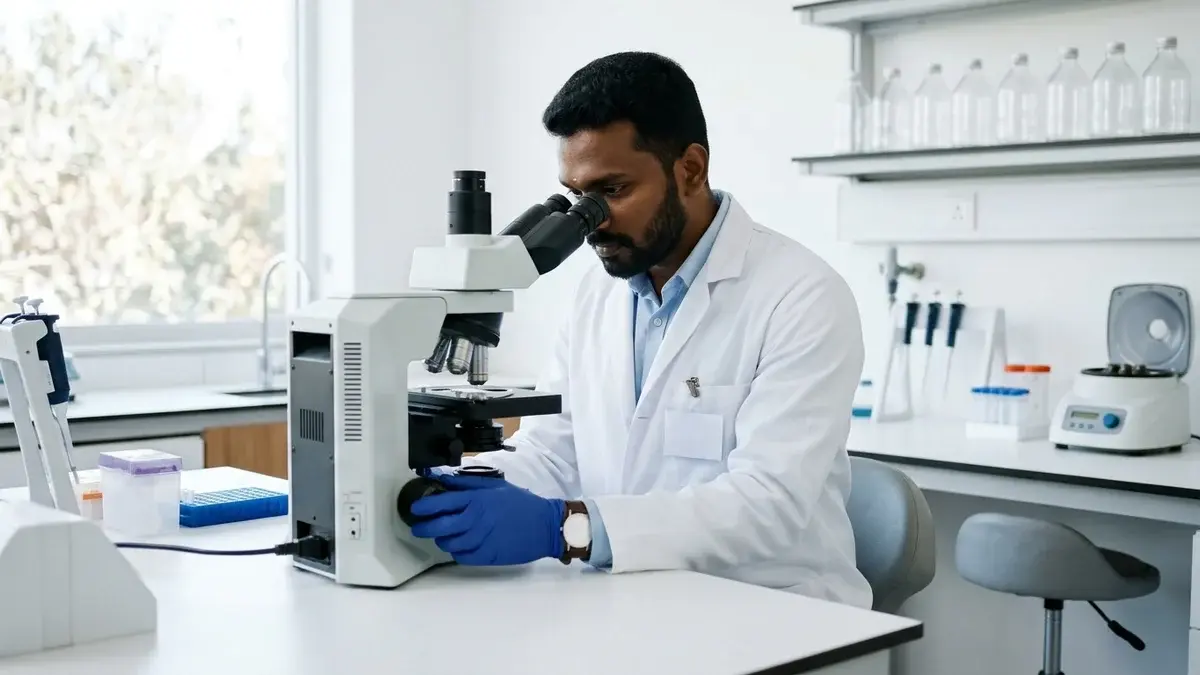
A semen report that shows no sperm can feel overwhelming, but there are clear steps to find the cause and real options for becoming a father. This guide explains azoospermia treatment in plain words, from the tests that confirm the diagnosis to surgical sperm retrieval and assisted reproduction. At Yaal Fertility Centre in Chennai, Dr. Rukkayal Fathima and her team see many couples at exactly this point, and the first step is always to confirm the diagnosis.
What is azoospermia? Meaning and diagnosis
Azoospermia means there is no measurable sperm in the semen, even after the sample is spun down in a centrifuge and checked under the microscope. It affects about 1 in 100 men, and is found more often among men tested for infertility. It is a finding to investigate, not a final verdict on a man's fertility.
Most men with azoospermia have no symptoms. Semen usually looks normal, and sexual function and desire are usually unaffected, which is why it is often found only during a fertility check. Some men notice small or soft testicles, or have a history of undescended testicles, groin surgery or mumps.
Why a second semen analysis is needed
One report is never enough to diagnose azoospermia. A recent fever, an incomplete sample or lab variation can all affect the result, so guidelines ask for at least two separate semen analyses, done weeks apart.
The lab spins the sample so that even a few sperm collect at the bottom of the tube. If a small number of sperm are found, the diagnosis becomes cryptozoospermia (an extremely low sperm count), not azoospermia. This matters because sperm in the semen, even very few, can be used for ICSI without surgery. Our page on low sperm count treatment explains those options.
Obstructive vs non-obstructive azoospermia
Whether the cause is a blockage or a production problem shapes the whole treatment plan. Doctors divide azoospermia into two types:
- Obstructive azoospermia (OA): the testes make sperm normally, but a blockage or a missing duct stops it reaching the semen.
- Non-obstructive azoospermia (NOA): the passages are open, but the testes make very little or no sperm, because of hormone problems, genetic causes or damage to the testes.
| Feature | Obstructive (OA) | Non-obstructive (NOA) |
|---|---|---|
| Sperm production | Normal in the testes | Very low or absent |
| Passages | Blocked or missing | Open |
| Testicle size | Usually normal | Often smaller or softer |
| FSH hormone level | Usually normal | Often high |
| Usual sperm retrieval | PESA, TESA or MESA | Micro-TESE |
Key tests: examination, hormones and scan
- Physical examination: checks testicle size, whether the vas deferens can be felt, and looks for a varicocele.
- Hormone blood tests: FSH, LH and testosterone. A high FSH usually points to a production problem, while a normal FSH suggests a blockage.
- Scrotal Doppler ultrasound: looks at the testes, the epididymis and the veins.
When genetic tests are advised
When non-obstructive azoospermia is suspected, the male infertility guideline from the American Urological Association (AUA) and the American Society for Reproductive Medicine (ASRM) recommends genetic testing. A karyotype looks for chromosome changes such as Klinefelter syndrome (47,XXY), and a Y chromosome microdeletion (AZF) test looks for missing pieces in the AZF regions (AZFa, AZFb or AZFc). These results help doctors judge whether sperm retrieval is likely to find sperm.
Which causes of azoospermia can be treated?
Some causes can be reversed with medicine or surgery. Finding them early saves time and can avoid surgery altogether.
Hormone treatment for hypogonadotropic hypogonadism
In this condition, the pituitary gland does not send the signals the testes need to make testosterone and sperm. Because the testes themselves are healthy, hormone injections such as hCG and hMG can often restart sperm production over several months. Once sperm appear in the semen, natural conception or simpler treatment may become possible.
Recovery after testosterone or steroid use
Testosterone injections, gels and gym steroids switch off the pituitary signals that drive sperm production, and often cause azoospermia. Stopping them lets the system recover, although this can take many months. A specialist can track recovery with blood tests and semen analyses, and may use medicines to help. Always tell your doctor about any supplements, gym products or hormones you have taken.
Some blockages can also be treated. A blocked ejaculatory duct, for example, may be opened surgically so that sperm can reach the semen again.
Surgical sperm retrieval and azoospermia treatment options
When sperm cannot be brought back into the semen, it can often be collected directly from the testes or epididymis. The method depends on the type of azoospermia. Our guide to TESA vs micro-TESE compares them in detail.
- Obstructive azoospermia: PESA, TESA or MESA, followed by ICSI.
- Non-obstructive azoospermia: micro-TESE, followed by ICSI.
TESA, PESA and MESA for blockages
When there is a blockage, sperm production behind it is usually healthy:
- PESA (percutaneous epididymal sperm aspiration): a fine needle draws sperm from the epididymis under local anaesthesia.
- TESA (testicular sperm aspiration): a fine needle draws sperm-containing tissue from the testis.
- MESA (microsurgical epididymal sperm aspiration): a surgeon uses an operating microscope to collect sperm from the epididymis.
Micro-TESE for non-obstructive cases
In non-obstructive azoospermia, sperm may be made only in small patches of the testis. In micro-TESE, the surgeon uses a high-powered microscope to find and take the tubules most likely to contain sperm, while protecting the surrounding tissue. Learn more on our TESA and micro-TESE page.
Using retrieved sperm with ICSI
Surgically retrieved sperm is used with ICSI as part of an IVF cycle. An embryologist picks a single healthy sperm and injects it directly into each egg. Sperm can be used fresh or frozen for a later cycle, which gives couples flexibility in planning.
Can lifestyle changes or supplements fix azoospermia?
To be clear: supplements, vitamins and lifestyle changes cannot open a blocked duct or change a genetic cause. Relying on unproven remedies only delays proper care.
Good habits still support the testes and sperm health while you are being evaluated or preparing for retrieval:
- Avoid heat: limit hot baths and saunas, and keep laptops off your lap.
- Stop testosterone and steroids: never use them while trying to father a child.
- Cut out toxins: stop smoking and limit alcohol.
- Keep a healthy weight: excess body fat upsets the hormones that drive sperm production.
Be wary of products that claim to "cure zero sperm count". Safe treatment depends on an accurate diagnosis.
Realistic expectations and family-building options
Sperm can be found in many men with azoospermia, but retrieval cannot be guaranteed, especially in non-obstructive cases. Understanding all the possible outcomes in advance helps couples cope.
Emotional support and confidentiality
A diagnosis of male infertility can bring grief, frustration or a sense of isolation. It is not a verdict on your masculinity. Open conversation between partners, and counselling where helpful, makes a real difference. Your consultation and results stay confidential.
Donor sperm when retrieval is not possible
If micro-TESE does not find sperm, couples can still build a family together. Treatment with donor sperm through IUI or IVF is an established option, and our team explains the donor programmes and the legal requirements in India before you decide.
Frequently asked questions about azoospermia
What is the main cause of azoospermia?
It is caused either by a blockage in the male reproductive tract (obstructive azoospermia) or by very low sperm production in the testes (non-obstructive azoospermia). Blockages can follow infection, injury or surgery, or be present from birth. Low production is often linked to hormone problems, genetic conditions such as Klinefelter syndrome, or past medical treatment.
Can a man with azoospermia father a child?
Yes, many men with azoospermia can father a biological child. Sperm retrieved by TESA, MESA or micro-TESE can be used with ICSI to fertilise the female partner's eggs in an IVF lab.
How is non-obstructive azoospermia treated?
Any hormone problem is treated first. If sperm still do not appear in the semen, micro-TESE is used to look for small areas of sperm production in the testes, and any sperm found are used for ICSI straight away or frozen for later.
Is azoospermia permanent?
Not always. Some blockages can be treated, and azoospermia caused by hormone problems or by testosterone or steroid use can often be reversed. When it cannot, surgical sperm retrieval often still makes assisted reproduction possible.
Does azoospermia have any symptoms?
Usually not. Most men feel well and have normal sexual function. It is typically found on a semen analysis during a fertility check.
Male fertility care at Yaal Fertility Centre, Chennai
At Yaal Fertility Centre, Dr. Rukkayal Fathima, MRCOG (UK), and her team assess both partners together and explain the findings clearly before recommending a plan.
Kilpauk and Mylapore are our main centres for male infertility. An evaluation can include repeat semen analysis, hormone blood tests and a scrotal Doppler ultrasound, with genetic tests arranged when they are needed. When surgical sperm retrieval is required, Dr. Rukkayal Fathima coordinates it with consultant urologists and times it with the ICSI cycle.
The first semen analysis does not need a trip across the city: every centre has an andrology lab and a semen collection room, including Kilpauk, Mylapore, Thiruvanmiyur, Pallikaranai, Madipakkam, Red Hills, Velappanchavadi and Tambaram. To discuss your results in confidence, call +91 75500 06704.
Written by
Dr. Rukkayal Fathima
Specialist at Yaal Fertility Centre, Chennai. Providing expert guidance on fertility and women's health.