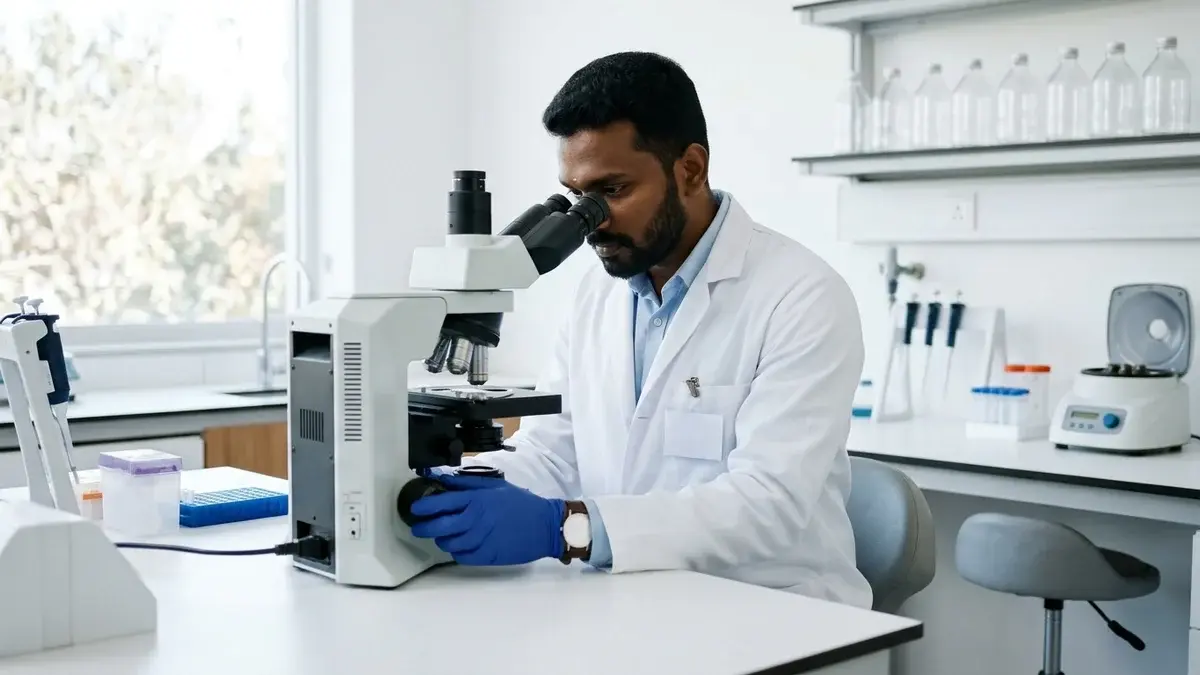

Low testosterone and fertility are closely linked, but not in the way many men expect. Testosterone affects energy and sex drive, and the same hormone system sends the signals the testes need to make sperm. Understanding how it works helps couples avoid one common mistake: taking testosterone while trying to conceive. At Yaal Fertility Centre in Chennai, Dr. Rukkayal Fathima and the team check male hormones alongside a semen analysis for exactly this reason.
Watch · 1:29 · Tamil
“Any good news?” Why is it always asked of the woman?
Why the pregnancy question always goes to the woman, how everyday habits affect male fertility, and when both partners should get tested.
How are low testosterone and fertility connected?
Making sperm depends on signals between the brain and the testes. The pituitary gland in the brain releases two hormones. LH tells the testes to make testosterone, and FSH supports the cells that nurture developing sperm. Without these signals, sperm production slows or stops.
Testosterone inside the testes vs in the blood
The testosterone level inside the testes is many times higher than the level in the blood, and sperm production depends on that high local level. A blood test shows only the circulating level.
So a man can have a normal blood testosterone level and still have a sperm problem. Equally, a low blood level does not automatically mean infertility, because the testes may still make enough testosterone locally to produce sperm. That is why doctors always pair hormone tests with a semen analysis.
How the brain and testes talk to each other
The hypothalamus in the brain releases a hormone called GnRH, which prompts the pituitary to release LH and FSH. LH acts on the cells in the testes that make testosterone, and FSH acts on the cells that support sperm. When testosterone in the blood is high, the brain turns these signals down. If this balance is upset by illness, stress or medicines, both testosterone and sperm production suffer.
What are the signs of low testosterone in men?
Symptoms help doctors decide which tests are needed, but they cannot confirm low testosterone on their own.
Common symptoms
| Area | Possible signs |
|---|---|
| Sexual health | Lower sex drive, difficulty with erections, less semen |
| Body | Tiredness, loss of muscle, more fat around the waist |
| Mood | Low mood, poor focus, low motivation |
What causes low testosterone in younger men?
In younger men, low testosterone is less often due to age. Causes can start in the testes, such as past injury, infection or a varicocele, or outside them, such as a pituitary problem, high prolactin, thyroid disease, obesity, poorly controlled diabetes, sleep apnoea or long-term stress.
Because these symptoms overlap with everyday stress and other conditions, doctors confirm the diagnosis with blood tests and a semen analysis rather than symptoms alone. Erection problems in particular often have other causes too, which we cover in erectile dysfunction and fertility.
Why testosterone therapy can stop sperm production
Taking testosterone while trying to conceive works against fertility, and often acts like a contraceptive.
Testosterone therapy comes as injections, gels, patches or pellets, and gym steroids work in a similar way. When extra testosterone enters the blood, the brain senses there is plenty and stops sending LH and FSH.
What happens step by step
- Testosterone from injections, gels or steroids raises the blood level.
- The brain senses the high level and stops releasing LH and FSH.
- Without LH, the testes stop making their own testosterone, so the level inside the testes falls.
- Without FSH and local testosterone, sperm production drops sharply, sometimes to no sperm at all (azoospermia).
The male infertility guideline from the American Urological Association (AUA) and the American Society for Reproductive Medicine (ASRM) states that testosterone on its own should not be prescribed to men who want to father a child now or in the future.
Recovery after stopping testosterone
Stopping testosterone is the first step to restoring sperm production, but recovery takes time. Each sperm takes about 74 days to develop, and the brain's hormone signals take months to return to normal.
For many men, sperm counts recover over several months, and for some it takes more than a year. The time depends on how long testosterone was used, the dose, age and how the testes worked before. A specialist can monitor recovery with blood tests and semen analyses, and may use medicines to help.
How doctors test testosterone and male fertility
A clear diagnosis pairs morning blood tests with a semen analysis.
Blood tests
Testosterone is highest in the morning, so blood is usually taken early in the day. A typical panel includes:
- Total testosterone, and sometimes free testosterone
- LH: the brain's signal to make testosterone
- FSH: the brain's signal to make sperm
- Prolactin: a high level can suppress these signals; see our guide to high prolactin and fertility
- Thyroid and blood sugar tests: to look for thyroid problems or diabetes
Reading hormones alongside the semen analysis
A semen analysis measures sperm count, movement and shape. Read together with the hormone results, it tells doctors whether the problem starts in the testes or in the brain's signals.
Body weight also affects hormones, including the protein that carries testosterone in the blood. Our guide to weight and male fertility explains this in more detail.
Treatments for low testosterone when trying to conceive
Instead of testosterone, fertility specialists use medicines that raise the body's own testosterone while protecting or boosting sperm production. All of them need a doctor's prescription and regular monitoring.
Tablets: clomiphene and aromatase inhibitors
Clomiphene citrate blocks oestrogen's effect on the brain, so the pituitary releases more LH and FSH. This encourages the testes to make more of their own testosterone and support sperm production.
Aromatase inhibitors such as anastrozole reduce the conversion of testosterone into oestrogen in body fat. This raises the body's own testosterone without switching off the brain's signals.
Injections: hCG and FSH
For men whose pituitary does not send enough signals, or who are recovering from testosterone use, doctors may prescribe hormone injections. hCG acts like LH and prompts the testes to make testosterone again. It is often combined with FSH injections to support full sperm development.
Doses are adjusted using regular blood tests and semen analyses. If hormone treatment does not raise sperm counts enough for natural conception, our page on low sperm count treatment explains the next options, including IUI and ICSI.
Natural ways to support healthy testosterone and sperm
Lifestyle changes can improve natural hormone levels and support sperm health alongside medical advice.
Weight, exercise and sleep
Body fat contains an enzyme that converts testosterone into oestrogen, so losing excess weight helps testosterone levels recover naturally.
Regular exercise, combining moderate strength training with walking, cycling or swimming, improves blood sugar control and supports healthy hormone levels. Avoid extreme overtraining, which can suppress the brain's hormone signals.
Most of the day's testosterone is released during deep sleep, so aim for 7 to 8 hours a night. Managing stress, stopping smoking and cutting down on alcohol also protect testosterone production and sperm.
The truth about testosterone boosters
Many online and over-the-counter products claim to raise testosterone quickly, but there is little good evidence that they improve fertility. Some unregulated products also contain hidden steroids, which can switch off sperm production. Always check with a fertility specialist before taking any supplement while trying to conceive.
Frequently Asked Questions About Low Testosterone and Fertility
Can a man with low testosterone father a child naturally?
Yes, often. If the testes still make enough testosterone locally to produce healthy sperm, and the semen analysis is normal, natural conception is possible without treatment.
How long does sperm take to return after stopping testosterone?
Usually several months, and sometimes more than a year. It depends on how long and how much testosterone was used, age and how the testes worked before. Doctors may use hCG or clomiphene to help recovery.
Do zinc or vitamin D increase testosterone and fertility?
Correcting a confirmed deficiency can help hormone levels. Taking high doses when your levels are already normal does not raise testosterone or improve sperm.
Is low testosterone the main cause of low sperm count?
No. It is only one possible cause. Genetic factors, varicocele, blockages, past infections, heat and oxidative stress can all lower sperm count even when hormone levels are normal.
Should I stop gym supplements or steroids before trying for a baby?
Yes. Anabolic steroids and any product containing testosterone can switch off sperm production, so stop them and tell your doctor what you took. A semen analysis a few months later shows how well sperm production is recovering.
Talk to a specialist at Yaal Fertility Centre
If you have been trying for 12 months, or 6 months if the female partner is over 35, both partners should be assessed together.
At Yaal Fertility Centre in Chennai, Dr. Rukkayal Fathima, MRCOG (UK), and her team assess male hormones and fertility alongside the female partner's tests, and guide men safely off testosterone when it is getting in the way. Semen analysis is available at all eight centres — Kilpauk, Mylapore, Thiruvanmiyur, Pallikaranai, Madipakkam, Red Hills, Velappanchavadi and Tambaram — and Kilpauk and Mylapore are our main centres for male infertility. When sperm numbers stay low despite hormone treatment, ICSI can help achieve fertilisation. You can also call +91 75500 06704.
Written by
Dr. Rukkayal Fathima
Specialist at Yaal Fertility Centre, Chennai. Providing expert guidance on fertility and women's health.