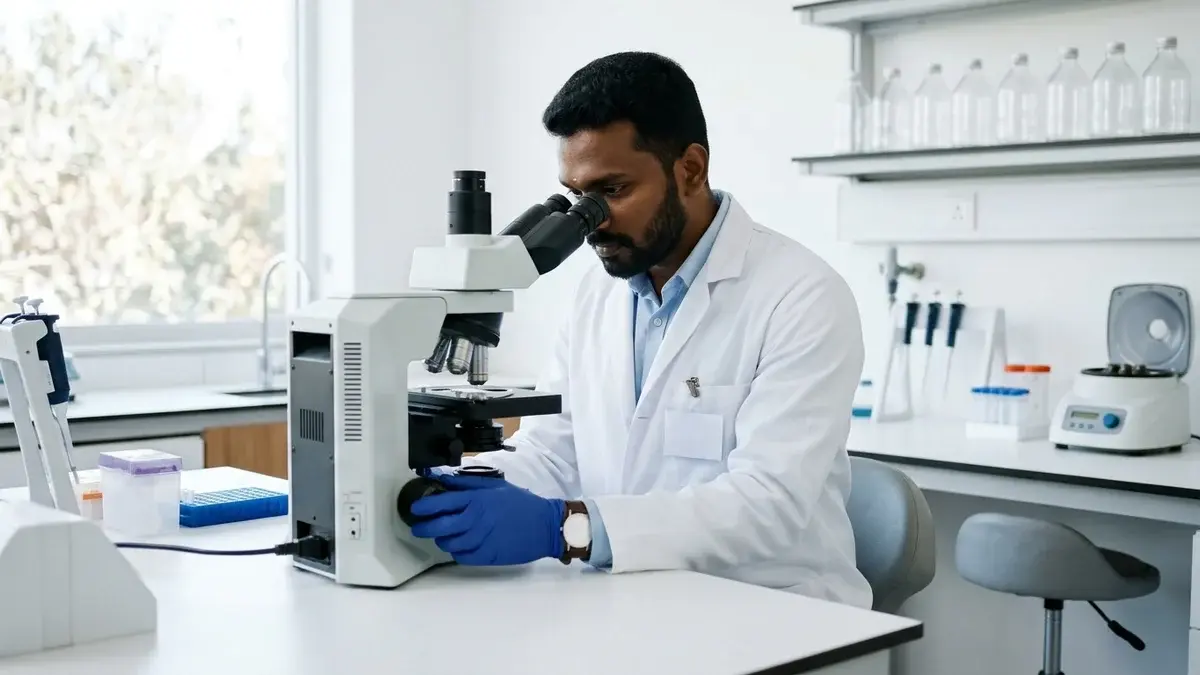

An IT job does not cause infertility by itself. Writing code or sitting in meetings does nothing to eggs or sperm. What can lower fertility is the routine that often comes with the job: long hours of sitting, a laptop on the lap, slow weight gain, short sleep, constant deadline stress and putting off children until later. Most of these can be changed, and the effects on sperm and ovulation usually improve once they are. At Yaal Fertility Centre in Chennai, Dr. Rukkayal Fathima and our team meet many couples from the city's IT parks, and this guide covers what the research actually shows, where it is still uncertain, and what to do about it.
Does an IT Job Affect Fertility? The Short Answer
No study shows that working in IT, as such, makes people infertile. Software engineers, testers, analysts and support staff conceive every day. But the job tends to bundle together several habits that each have some link to fertility:
| Desk-job habit | What it may affect | Strength of evidence | Can you change it? |
|---|---|---|---|
| Sitting for many hours | Scrotal temperature, sperm count | Moderate, mostly small studies | Yes, with regular breaks |
| Laptop on the lap | Scrotal temperature | Good for heat rise; effect on fertility less certain | Yes, easily |
| Tight underwear and trousers | Sperm concentration | Moderate | Yes |
| Weight gain and insulin resistance | Sperm quality, testosterone, ovulation, PCOS | Strong | Yes, over months |
| Short or irregular sleep | Testosterone, cycle regularity | Moderate | Partly |
| Chronic work stress | Libido, cycles, possibly semen quality | Mixed | Partly |
| Wi-Fi and screens | Nothing proven | Weak | Not needed |
| Phone in the front pocket | Possibly sperm motility | Weak and inconsistent | Yes, easily |
| Delaying parenthood | Egg number and quality; sperm quality after 40 | Strong | Plan ahead |
The pattern is clear. The well-proven factors are weight, age, smoking and heavy drinking. The heat-related factors are real but smaller. The radiation worries are the least supported. Keeping this order in mind stops you from fretting over the wrong things.
Sitting for Long Hours and Sperm Count
Sperm are made best a few degrees below core body temperature, which is why the testes hang outside the body. Anything that holds heat around the scrotum for hours can slow sperm production for a while.
How Long Sitting Raises Scrotal Temperature
When you sit, the thighs close together, airflow drops and the scrotum is pressed against warm skin and fabric. Small studies that measured scrotal temperature found it rises within minutes of sitting and stays raised for as long as you stay seated. Professional drivers, who sit for most of the working day, have been studied most. Desk workers are in a similar position, especially through long sprints, calls and late releases.
Studies that count hours of screen-based sitting give a mixed picture. Some found that young men who spent many hours a week watching screens while seated had lower sperm concentration than more active men. Others found little difference once weight and fitness were taken into account. The honest summary is that long sitting is one modest factor, not a cause of infertility on its own.
Is the Effect Permanent?
No. Sperm take roughly two and a half to three months to develop, so a semen sample reflects how you lived over the last three months. When heat exposure drops, counts usually recover over the following few months. This is also why a single change, made today, will not show up on a semen test next week.
For heat and the other everyday habits that affect sperm, see our guide to how to improve sperm quality naturally.
Laptop on Lap and Sperm: What the Research Shows
Working with a laptop on the thighs, on the sofa or in a cab, is common in tech jobs. A laptop's base gets warm, and the posture needed to balance it keeps the thighs pressed together.
Heat, Not Radiation, Is the Main Concern
In a well-known study, men who sat with a running laptop on their lap had a scrotal temperature rise of around two to three degrees Celsius within an hour. A lap pad reduced the heat from the device, but the posture alone still warmed the scrotum. Researchers have not shown that this short-term rise causes infertility, but heat is a known stress on sperm production, so it is a sensible habit to drop.
Simple Fixes
- Keep the laptop on a desk or a table, not your lap.
- If you must work on the sofa, use a firm board or tray and sit with your knees apart.
- Use an external keyboard and monitor at home if you work from home often.
- Stand up between calls rather than sitting through a whole afternoon.
Tight Clothing and Scrotal Heat
Underwear style sounds trivial, but it has been studied. In one large study of men attending a fertility clinic, those who mostly wore looser underwear had modestly higher sperm concentration than men who wore tight briefs. Tight synthetic trousers, compression wear and long hours in skinny jeans add to the same heat effect.
You do not need special products. Loose cotton underwear, breathable trousers and changing out of gym compression wear soon after exercise are enough. In Chennai's humid weather, cotton is also simply more comfortable.
Sedentary Weight Gain, Insulin Resistance and Fertility
Of all the desk-job factors, slow weight gain is the one with the strongest evidence. Long hours, canteen meals, late-night snacks and little movement can add a few kilos a year without anyone noticing until a health check flags raised sugar or cholesterol.
How Extra Weight Affects Men
Fat tissue converts some testosterone into oestrogen. Higher oestrogen tells the brain to send fewer signals to the testes, so testosterone and sperm production both fall. Men with obesity are more likely to have lower sperm count, poorer motility and more sperm DNA damage. Insulin resistance, common in South Asian men even at a "normal" body weight, adds inflammation that affects sperm too.
The good news is that this can improve. We cover it in detail in weight and male fertility, and the type of movement that helps most in exercise to increase sperm count.
How Extra Weight Affects Women
In women, weight gain and insulin resistance can disturb ovulation. High insulin pushes the ovaries to make more androgens (male-type hormones), and follicles may stop maturing properly. The result can be irregular or missed periods. Women who already have polycystic ovary syndrome often find their cycles become more irregular during desk-bound years.
Women in IT: PCOS, Irregular Cycles and Timing
Women in tech face the same sitting and sleep issues as men, plus a few of their own.
PCOS and Weight
PCOS is common among Indian women, and a sedentary routine can make its symptoms worse. Even modest weight loss, in the region of five per cent of body weight, can bring back regular ovulation in some women with PCOS. Regular activity improves insulin sensitivity whether or not the scale moves much. Our PCOS and fertility guide explains the condition and treatment options, and our PCOS management service supports women through it.
Irregular Cycles Under Pressure
Deadline weeks, travel, night support rotations and poor sleep can all delay ovulation for a cycle or two. That is usually temporary. Cycles that stay irregular for several months, or periods that stop, deserve a check rather than waiting to see if work calms down.
If your role includes regular night or rotating shifts, our separate guide on night shift and fertility covers the body clock, cycles and practical routines in more depth.
Delaying Pregnancy and Egg Freezing
Many women in IT plan pregnancy around promotions or onsite stints. Our guide to the best age to get pregnant for working women covers the trade-offs. Egg numbers fall steadily through a woman's thirties, and the share of eggs with normal chromosomes drops faster after about 35.
An AMH test gives a rough picture of egg reserve, though it does not predict natural fertility month to month. For women who know they want to wait, egg freezing is an informed option. It works best when eggs are frozen younger, usually before the mid-thirties, and it improves the odds later rather than guaranteeing a baby. It is worth discussing early rather than as a last resort.
Sleep Debt, Late Nights and Fertility
Late-night calls with US or UK teams, release nights and weekend catch-up are part of many IT jobs.
Sleep and Testosterone
Testosterone is released mainly during sleep. In one laboratory study, young men who slept about five hours a night for a week had noticeably lower daytime testosterone. Population studies suggest that men who regularly sleep very little, and possibly those who sleep very long hours, have slightly poorer semen quality than men who sleep around seven to eight hours.
Sleep and Cycles
In women, short and irregular sleep is linked with more irregular cycles, partly through stress hormones and partly through disturbed body-clock signals. The evidence is stronger for regular night shift work than for occasional late calls.
The practical aim is not perfection. Aim for a consistent sleep window most nights, protect it on the nights before your fertile window, and avoid stacking several short nights in a row.
Work Stress and Fertility: What Is Proven
Stress is the factor couples ask about most, and the evidence is genuinely mixed.
What Stress Can Do
Long-term stress raises cortisol, which can dampen the hormones that drive ovulation and sperm production. In practice, stress shows up most clearly in behaviour: less sex, lower libido, more alcohol, more smoking, poorer sleep and skipped meals. Some studies link higher perceived stress with lower semen quality or a longer time to conceive, but others find no clear effect.
What Stress Does Not Do
Stress is not usually the main cause of infertility, and reassuringly, studies have not found that stress during IVF lowers its success. Telling someone to "just relax" is not helpful advice. Our stress and fertility guide covers practical ways to cope while trying.
Weekend Habits Matter
Many IT professionals keep weekdays healthy and then unwind hard at weekends. Heavy drinking lowers testosterone and sperm quality, and binge sessions count even if weekdays are dry. Smoking, including occasional social smoking and vaping, harms sperm DNA and speeds up the loss of eggs. If you are trying to conceive, cutting right down on alcohol and stopping smoking are among the most useful single changes.
Wi-Fi, Screens and Phones: Myths and Honest Caveats
Wi-Fi and Screen Time
Office Wi-Fi, monitors and screen time have not been shown to harm human fertility. These devices give off low-energy, non-ionising radio waves at levels far below safety limits. Most of the alarming claims come from animal or test-tube studies at exposures unlike daily life. There is no reason to switch off routers or buy "radiation shields".
Phones in the Front Pocket
The phone question is less settled. Several observational studies found that men who carry a phone in a trouser pocket or use phones heavily have slightly lower sperm motility or concentration. These studies have real weaknesses: heavy phone users may also sit more, sleep less or differ in other ways, and results are not consistent. No study has shown that a phone in the pocket causes infertility.
A reasonable middle path, if you are trying to conceive, is to keep your phone on the desk or in a bag while at work. It costs nothing, and it removes one small uncertainty.
Delayed Parenthood: Age Matters for Both Partners
In IT, it is common for couples to marry in their late twenties or thirties and wait a few more years. Age is the single strongest factor in a woman's fertility, and it matters for men too.
- Women: fertility falls gradually from the early thirties and more steeply after 35, with more time to conceive and a higher miscarriage risk.
- Men: sperm production continues for life, but after about 40, semen quality tends to decline, conception can take longer, and sperm DNA damage becomes more common.
You do not need to rush, but knowing your starting point helps you plan. A basic check for both partners before you start trying, or when you decide to wait, is quick and practical.
A Desk Worker's Fertility Checklist
A short, realistic list that fits most IT schedules:
- Stand up every 30 to 60 minutes. Walk to refill water, take calls on your feet, or use stairs between floors.
- Laptop on the desk. Never on your lap for long stretches.
- Loose cotton underwear and breathable trousers.
- Move most days. Brisk walking, cycling, swimming, badminton or gym work for about 150 minutes a week helps weight, insulin and mood.
- Watch the canteen and late-night snacks. Swap fried snacks and sweet drinks for fruit, sundal, nuts or buttermilk.
- Protect sleep. A regular seven to eight hours most nights.
- Keep weekends moderate. Keep alcohol low and stop smoking and vaping completely.
- Phone on the desk, not in the front pocket.
- Check basic health once a year. Weight, blood pressure, sugar and thyroid, since problems here affect fertility too.
None of these needs a gym membership or a career change. Most couples can start the whole list this week.
When Should IT Professionals Get Tested?
See a fertility specialist if you have been trying for 12 months without success and the woman is under 35, or after 6 months if she is 35 or older. Go sooner if periods are irregular or absent, there is known PCOS or endometriosis, past pelvic surgery, or for men a history of undescended testes, testicular injury, mumps after puberty or a varicocele.
Semen Analysis for Men
A semen analysis is simple, inexpensive and non-invasive, and it is the first male test. It checks volume, count, motility and shape. Our guide to the semen analysis report explains each value. One abnormal result is usually repeated after a few weeks, since counts vary. If it stays abnormal, our male infertility team looks for treatable causes.
AMH and Basic Tests for Women
For women, an AMH blood test, a pelvic scan to count small follicles, and hormone tests such as thyroid and prolactin give a clear first picture. Checking ovulation and the fallopian tubes follows if needed. It is worth testing both partners together, since in many couples there is more than one factor.
Frequently Asked Questions About IT Jobs and Fertility
Does sitting for long hours reduce sperm count?
Long hours of sitting raise scrotal temperature and are linked with modestly lower sperm counts in some studies, though results are mixed. Standing or walking every 30 to 60 minutes and wearing loose clothing reduces the heat effect.
Can using a laptop on my lap cause infertility?
A laptop on the lap can raise scrotal temperature by a few degrees within an hour, which can temporarily affect sperm production. It has not been shown to cause permanent infertility, but keeping the laptop on a desk is an easy precaution.
Are software engineers more likely to be infertile?
There is no good evidence that software engineers as a group are more infertile. Related factors such as weight gain, poor sleep, smoking, heavy drinking and starting a family later matter more than the job title.
Does Wi-Fi or mobile radiation affect fertility?
There is no reliable evidence that Wi-Fi or normal screen use harms human fertility. Some studies link phones carried in the trouser pocket to lower sperm motility, but the evidence is weak, so keeping the phone on the desk is simply a sensible precaution.
Can work stress stop me from getting pregnant?
Stress alone is rarely the main cause of infertility, but it can disturb sleep, libido and cycles. If you have been trying for a year, or six months over 35, get tested rather than assuming stress is the reason.
How long does it take for sperm to improve after lifestyle changes?
Sperm take about two and a half to three months to develop. Improvements from changes such as weight loss or fewer hours of sitting usually show on a repeat semen analysis after about three months.
Should women in IT freeze their eggs?
Egg freezing is a reasonable option for women who know they want to delay pregnancy, and it works best when eggs are frozen at a younger age. An AMH test and a consultation help decide whether it suits you.
IT Job and Fertility Care at Yaal Fertility Centre, Chennai
Many of the couples we see work in Chennai's IT parks, and we understand how hard it can be to fit tests around sprints and client calls. At Yaal Fertility Centre, Dr. Rukkayal Fathima, MRCOG (UK) and the team start with simple tests for both partners, explain the results in plain words, and help you focus on the changes that make a real difference before suggesting any treatment.
Our Thiruvanmiyur centre is close to Tidel Park and the Taramani IT parks, Pallikaranai is near the Perungudi IT parks and Sholinganallur on OMR, Madipakkam is close to Guindy's Olympia Tech Park and Velachery, and Velappanchavadi is a short drive from the Porur tech parks. You can see our team at any of our eight centres across Chennai: Kilpauk, Mylapore, Thiruvanmiyur, Pallikaranai, Madipakkam, Red Hills, Velappanchavadi and Tambaram.
If long desk hours have you wondering about your fertility, or you have been trying for a while without success, book a consultation with Yaal Fertility Centre.
Written by
Dr. Rukkayal Fathima
Specialist at Yaal Fertility Centre, Chennai. Providing expert guidance on fertility and women's health.