
PCOD and PCOS are two names for the same group of hormone and ovary changes. PCOS (polycystic ovary syndrome) is the medical name used in guidelines worldwide. PCOD (polycystic ovarian disease) is an older term that is still widely used in India, and some doctors use it for a milder picture, mainly irregular periods and ovaries that look polycystic on a scan, while keeping "PCOS" for the fuller syndrome with excess male hormones and weight or sugar problems. Whatever the label on your report, the symptoms, tests and treatment follow the same principles. At Yaal Fertility Centre in Chennai, Dr. Rukkayal Fathima and our team see women every day who are confused by the two words, and this guide explains what they mean.
PCOD Meaning: Why Two Names Exist in India
If a scan centre, a family doctor and a gynaecologist each use a different word, it is easy to think you have been given three different diagnoses. In practice, you have not.
Where "PCOD" Comes From
"Polycystic ovarian disease" was the common name for this condition decades ago. Medical guidelines later moved to "polycystic ovary syndrome", because the condition is not just a disease of the ovaries. It is a pattern of hormone changes that can affect periods, skin, hair, weight, blood sugar and fertility. A "syndrome" is a group of features that tend to occur together.
In India the older word stuck, especially in everyday speech, magazines, scan reports and social media. That is why "PCOD problem" is one of the most searched health phrases among young Indian women.
What Doctors Usually Mean by Each Term
There is no single official definition of PCOD, so doctors use it in slightly different ways. Broadly:
- When a doctor says "PCOD", they often mean ovaries that look polycystic on a scan, with irregular or delayed periods, but few other signs. Some use it simply as another word for PCOS.
- When a doctor says "PCOS", they mean the formal diagnosis, made using agreed criteria (explained below), which may include acne, extra hair growth, weight gain and insulin resistance.
The most useful question to ask is not "Do I have PCOD or PCOS?" but "Which features do I have, and what do they mean for my health and plans?"
PCOD vs PCOS: The Difference at a Glance
| How "PCOD" is often used | PCOS (medical diagnosis) | |
|---|---|---|
| What it describes | Polycystic-looking ovaries with irregular periods | A hormone syndrome diagnosed by agreed criteria |
| Used where | Everyday speech and many reports in India | Medical guidelines worldwide |
| Typical features | Delayed or irregular cycles; few other signs | Irregular cycles, signs of high male hormones, polycystic ovaries (any two) |
| Weight and sugar | Often not a major issue | Insulin resistance is common, even in slim women |
| Long-term health check-ups | Still worthwhile | Recommended: sugar, cholesterol, blood pressure |
| Fertility | Mostly affected through irregular ovulation | Mostly affected through irregular ovulation |
| Treatment | Lifestyle first; treat symptoms or ovulation as needed | Same principles, tailored to the features you have |
The honest summary: the difference is mostly about how many features you have and how strongly, not two separate diseases.
Is PCOS More Serious Than PCOD?
When PCOD is used to mean a mild picture, then yes, the fuller PCOS picture tends to carry more long-term health risks, mainly diabetes and high cholesterol. But a "mild" label is not a reason to ignore it. Features can change over time, often with weight gain or stress, so regular check-ups matter either way.
PCOD Symptoms and PCOS Symptoms
Symptoms vary a lot. Two sisters with the same diagnosis can look completely different. Some women have only irregular periods; others have most of the signs below.
Period Changes
- Irregular periods: cycles longer than 35 days, or fewer than eight or nine periods a year.
- Missed periods for months at a time.
- Heavy or prolonged bleeding when a period finally comes, because the lining has built up for longer.
- Very occasionally, no periods at all.
These happen because the ovaries are not releasing an egg every month. Our guide to irregular periods explains other reasons cycles can change.
Skin and Hair Changes
These come from higher levels of androgens, often called male hormones, which all women have in small amounts:
- Acne, especially along the jaw, chin, chest or back, that persists beyond the teenage years.
- Extra hair growth (hirsutism) on the upper lip, chin, chest, tummy or thighs.
- Thinning hair on the scalp, particularly at the crown or the parting.
- Dark, velvety skin patches (acanthosis nigricans) on the back of the neck, underarms or groin. These are a sign of insulin resistance.
Weight and Metabolism
- Weight gain, especially around the tummy, and difficulty losing it.
- Sugar cravings and energy dips after meals, linked to insulin resistance.
- "Lean PCOS": many women with PCOS are not overweight at all. Normal weight does not rule it out.
Mood, Sleep and Wellbeing
Anxiety, low mood and poor body image are more common in women with PCOS, and so is snoring or disturbed sleep in those who are overweight. These are real parts of the condition and worth mentioning to your doctor. Our guide to hormonal imbalance symptoms in women covers how hormones shape mood and energy.
How PCOS Is Diagnosed: The Rotterdam Criteria in Plain Words
Most doctors use the Rotterdam criteria. You are diagnosed with PCOS if you have at least two of these three features, once other causes have been ruled out:
- Irregular or absent ovulation, usually shown by irregular or missed periods.
- Signs of high male hormones, either on the body (acne, extra hair, scalp thinning) or on a blood test.
- Polycystic-looking ovaries on ultrasound: many small follicles around the edge of the ovary, or a larger ovary than usual.
So a woman with irregular periods and acne can be diagnosed with PCOS even if her scan is normal. And a woman with polycystic-looking ovaries but regular periods and no hormone signs does not have PCOS.
Ruling Out Look-Alike Conditions
Several other conditions cause irregular periods or extra hair, so doctors check for them first:
- Thyroid problems, with a TSH blood test. See thyroid and fertility.
- High prolactin, a pituitary hormone that can stop periods. See hyperprolactinemia and fertility.
- Adrenal gland conditions, such as a rare inherited form of adrenal hyperplasia.
- Pregnancy, which is always checked when periods are missed.
Tests You May Be Offered
- Blood tests for thyroid, prolactin, male hormones (testosterone), and sometimes LH, FSH and AMH, usually in the first few days of a period if you have one.
- Blood sugar (fasting sugar or HbA1c) and sometimes a glucose tolerance test.
- Cholesterol (lipid profile).
- A pelvic ultrasound, often transvaginal for a clearer view of the ovaries, or through the tummy for women who have never been sexually active.
"Polycystic Ovaries" on a Scan Is Not the Same as PCOS
This is the source of much of the PCOD confusion. Scan reports often say "bulky ovaries with multiple peripheral follicles" or "polycystic ovarian morphology". Despite the word "cyst", these are not harmful cysts. They are small follicles, each holding an immature egg, that have paused in their growth.
Polycystic-looking ovaries are common in healthy young women, especially in their teens and early twenties. On their own, with regular periods and no other signs, they are not a diagnosis. That is why doctors usually avoid diagnosing PCOS on a scan alone, and why the diagnosis is made more carefully in teenagers, whose cycles can be irregular for a few years after periods start.
If you are worried about a true ovarian cyst, which is a different thing, your doctor will explain the difference on your scan.
How PCOD and PCOS Affect Fertility
The main way PCOS affects fertility is simple: if you do not ovulate regularly, there are fewer chances each year to conceive, and it is harder to know when your fertile days are.
What This Means in Practice
- Many women with PCOD or PCOS conceive naturally, especially when periods are only mildly irregular.
- It may take longer than average, because ovulation is less frequent.
- PCOS is one of the most treatable causes of infertility, because the main problem, ovulation, usually responds well to treatment.
For a detailed look at how PCOS affects eggs, the lining and pregnancy, read our full guide to PCOS and fertility.
Tracking Ovulation
Ovulation kits and period apps are less reliable when cycles are irregular. A follicular study, a short series of scans across your cycle, shows whether an egg is growing and when it is released, so you can time intercourse or treatment.
When to See a Fertility Specialist
See a specialist if you have been trying for 12 months (six months if you are over 35), or sooner if you have very few periods a year. With PCOS, it is often sensible not to wait a full year, because the cause is usually clear and treatable.
Treatment for PCOD and PCOS
There is no single cure, but symptoms can be controlled very well, and most women lead completely normal lives. Treatment depends on what bothers you most and whether you want to conceive now.
Lifestyle: The Foundation for Everyone
For women who are overweight, losing even a small amount of weight can make periods more regular and bring back ovulation. For women at a normal weight, the same healthy habits still improve insulin resistance and hormone balance.
- Regular exercise: brisk walking, cycling, dance, yoga and strength training all help. See our guide to PCOS and exercise for fertility.
- Better sleep and steady meal times.
- Stress management, since stress can worsen cycles and cravings.
If You Are Not Trying to Conceive
- Regulating periods: hormonal treatment, such as the combined pill or a course of progestogen, can bring regular bleeds and protect the womb lining.
- Skin and hair: treatments for acne and extra hair, alongside hair removal methods.
- Insulin resistance: your doctor may suggest an insulin-sensitising medicine such as metformin in some cases.
If You Are Trying to Conceive
- Ovulation induction: tablets that help the ovary grow and release an egg, usually with scan monitoring. See ovulation induction.
- Injections if tablets do not work, with careful monitoring to avoid too many eggs.
- IUI or IVF when other factors are present or simpler treatment has not worked. The PCOS and fertility guide explains this step-by-step approach.
Your doctor will choose the right medicine and plan for you. Do not take fertility tablets without monitoring, as they can cause multiple eggs and twins or more. Our PCOS management service brings these options together.
Diet for PCOD and PCOS
Food cannot cure PCOS, but it is one of the most powerful tools you have. The aim is to keep blood sugar steady and reduce insulin spikes.
Simple Principles
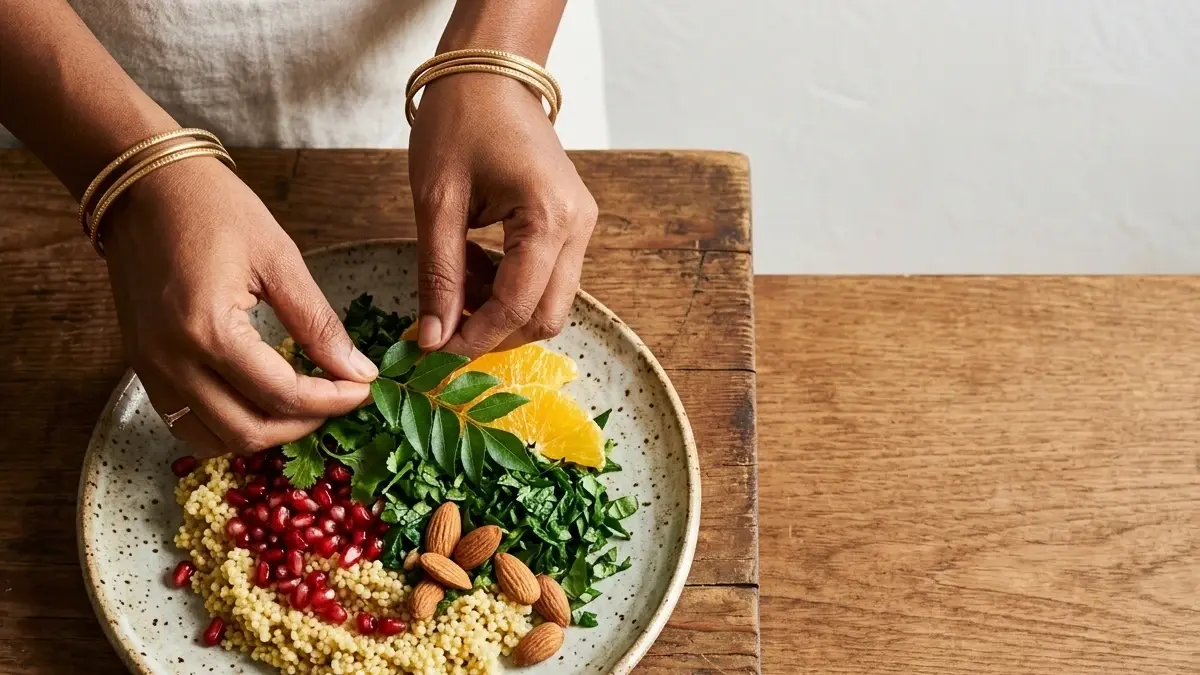
- Choose slower carbohydrates: millets (ragi, thinai, kambu), brown or hand-pounded rice in moderate portions, whole wheat, oats.
- Add protein to every meal: dal, sundal, curd, paneer, eggs, fish or chicken.
- Fill half the plate with vegetables: keerai, beans, cabbage, gourds, brinjal.
- Cut down on sugar and refined flour: sweets, bakery items, maida parotta, sweetened drinks and packaged juices.
- Watch portions of white rice and fried snacks such as bajji and murukku.
- Eat at regular times rather than skipping meals and overeating later.
A Sample South Indian Day
- Breakfast: ragi dosa or vegetable oats upma with sambar, and a boiled egg if you eat eggs.
- Lunch: a small serving of rice or millet with sambar, keerai poriyal, a vegetable kootu and curd.
- Evening: sundal, a handful of roasted chana or peanuts, and unsweetened tea or coffee.
- Dinner: two chapatis with dal or chicken curry and a vegetable.
For full meal plans and food lists, read our PCOS diet for fertility.
Long-Term Health With PCOD and PCOS
PCOS is not only about periods and fertility. Over the years it raises the chance of some health problems, which is why check-ups continue even after you have finished having children.
- Type 2 diabetes and gestational diabetes, because of insulin resistance. Regular sugar checks catch problems early.
- High cholesterol and blood pressure, which affect heart health later in life.
- Thickened womb lining: going many months without a period lets the lining build up. Having at least a few bleeds a year, naturally or with treatment, protects it.
- Sleep apnoea, especially with higher weight.
- Low mood and anxiety, which deserve the same attention as physical symptoms.
The good news is that the same healthy habits that help periods and fertility also lower these risks.
Myths About PCOD and PCOS
| Myth | Fact |
|---|---|
| PCOD and PCOS are completely different diseases | They describe the same condition; the difference is mostly in how many features you have |
| You cannot get pregnant with PCOD | Many women conceive naturally, and treatment works well for most others |
| PCOS only affects overweight women | Lean women can have PCOS too |
| Polycystic ovaries on a scan means PCOS | A scan alone is not enough; you need two of the three Rotterdam features |
| The "cysts" need surgery | They are small follicles with immature eggs, not harmful cysts |
| PCOS goes away after marriage or childbirth | It is long-term; symptoms may improve, but check-ups should continue |
| Diet and exercise only matter if you are overweight | Healthy habits improve insulin resistance at any weight |
When to See a Doctor
Book an appointment if you have:
- Periods more than 35 days apart, fewer than eight or nine a year, or none for three months (once pregnancy is ruled out).
- New or worsening acne, extra facial or body hair, or hair thinning.
- Dark patches on the neck or underarms, or rapid weight gain.
- Very heavy bleeding when your period comes.
- A scan report that says "PCOD" or "polycystic ovaries" and you are not sure what it means.
- Difficulty conceiving, especially with irregular cycles.
Frequently Asked Questions About PCOD vs PCOS
What is the difference between PCOD and PCOS?
They describe the same hormone condition. PCOS is the medical name, while PCOD is an older term still common in India, often used for a milder picture with irregular periods and polycystic-looking ovaries.
What is the meaning of PCOD?
PCOD stands for polycystic ovarian disease. It describes ovaries with many small, immature follicles, usually with irregular periods.
What are the common symptoms of PCOD?
Irregular or missed periods, acne, extra facial or body hair, hair thinning, weight gain and dark skin patches. Many women have only one or two of these.
Can PCOD be cured permanently?
There is no permanent cure, but symptoms can be controlled very well. Many women have regular periods again with weight loss, exercise and, when needed, treatment.
Can I get pregnant with PCOD or PCOS?
Yes. Many women conceive naturally, and for others, treatment to help ovulation usually works well.
Does polycystic ovary on a scan mean I have PCOS?
Not on its own. You need at least two of three features: irregular ovulation, signs of high male hormones, and polycystic ovaries on scan.
Is PCOD caused by stress or lifestyle?
Genes play a major part, and PCOS often runs in families. Weight gain, inactivity and stress can bring out or worsen the symptoms.
Which doctor should I see for PCOD?
A gynaecologist is the right first doctor, and a fertility specialist if you are trying to conceive. They can confirm the diagnosis and plan treatment.
PCOD and PCOS Care at Yaal Fertility Centre, Chennai
At Yaal Fertility Centre, Dr. Rukkayal Fathima, MRCOG (UK) and our team take time to explain what your scan and blood tests actually show, whatever label you were given before. We look at your periods, skin, weight, sugar and fertility plans together, and build a plan that fits your life, from lifestyle support to ovulation treatment when you are ready for a baby.
You can see our team at any of our eight centres across Chennai: Kilpauk, Mylapore, Thiruvanmiyur, Pallikaranai, Madipakkam, Red Hills, Velappanchavadi and Tambaram.
If you have been told you have PCOD or PCOS, or your periods have become irregular, book a consultation with Yaal Fertility Centre.
Written by
Dr. Rukkayal Fathima
Specialist at Yaal Fertility Centre, Chennai. Providing expert guidance on fertility and women's health.