The quickest period pain relief for most women comes from warmth on the lower tummy, gentle movement, rest and, when needed, a simple pain reliever taken early as your doctor or pharmacist advises. Ordinary cramps start around the first day of bleeding and settle within two or three days. Pain that keeps you away from college or work, does not ease with these measures, or gets worse year after year is not something to put up with, because it can be a sign of endometriosis, adenomyosis or fibroids. At Yaal Fertility Centre in Chennai, Dr. Rukkayal Fathima and our team see women every week who were told for years that severe cramps were "normal".
Why Do Periods Hurt?
Each month the lining of the womb thickens in case a pregnancy starts. When no pregnancy happens, hormone levels fall and the lining breaks down and comes away as your period. To push it out, the womb muscle tightens and relaxes in waves.
These contractions are driven by natural chemicals called prostaglandins, made by the womb lining itself. Strong contractions briefly squeeze the small blood vessels in the womb wall and reduce its oxygen supply. That is what you feel as cramping. Women who make more prostaglandins tend to have stronger cramps, and often heavier bleeding too.
Prostaglandins also reach the bowel and the rest of the body, which is why period pain often comes with loose motions, nausea, headache or feeling faint. Our guide to the menstrual cycle phases explains the hormone changes behind each part of the month.
Primary and Secondary Dysmenorrhoea
Doctors call painful periods dysmenorrhoea (spelt dysmenorrhea in American English). There are two kinds, and telling them apart is the most useful first step.
| Primary dysmenorrhoea | Secondary dysmenorrhoea | |
|---|---|---|
| What causes it | Prostaglandins alone; the womb and ovaries are healthy | An underlying condition, such as endometriosis, adenomyosis, fibroids or infection |
| When it starts | Within a year or two of the first period, in the teens | Often later, in the 20s, 30s or 40s, sometimes after years of easy periods |
| Timing in the cycle | Starts just before or with bleeding, lasts 1 to 3 days | May start days before bleeding, last the whole period or occur at other times |
| Pattern over years | Stable, often eases with age or after childbirth | Tends to get worse over time |
| Other symptoms | Nausea, loose motions, back ache, tiredness | Pain during sex, heavy bleeding, pain passing stools or urine, trouble conceiving |
| Response to simple care | Usually good | Often only partial or short-lived |
Primary dysmenorrhoea is very common and is not a disease. Secondary dysmenorrhoea is a symptom, and treating the cause is what brings lasting relief.
Why Some Women Feel It More
Two women with similar periods can feel very different levels of pain. Things that tend to make cramps worse include:
- Starting periods at a young age.
- Heavy or long periods.
- Smoking.
- Poor sleep, stress and low mood, which lower the body's pain threshold.
- A family history of painful periods.
Cramps often ease after a pregnancy and birth, and with age, but this is a tendency, not a promise.
Home Remedies for Period Pain Relief
For primary dysmenorrhoea, simple self-care works well for most women. These measures are also safe to use alongside medical treatment for secondary causes.
Heat on the Lower Tummy or Back
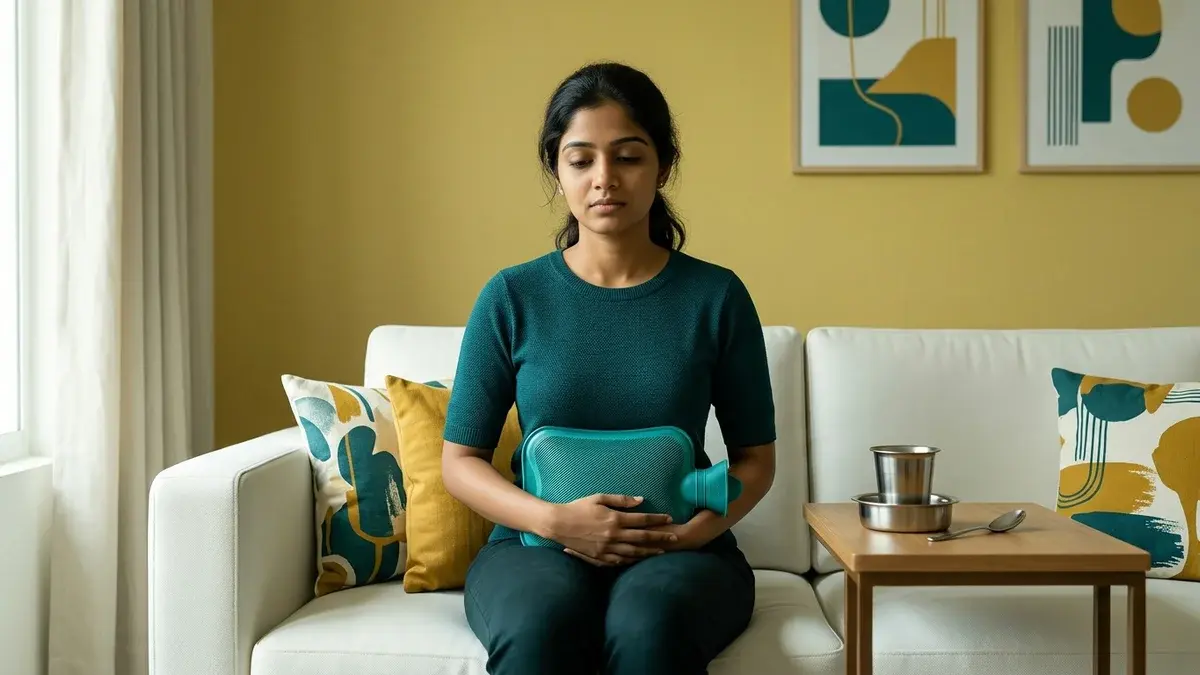
Warmth relaxes the womb muscle and improves blood flow to it. Studies have found that steady heat on the lower tummy can ease cramps about as well as a common pain reliever for some women.
- A hot water bag or heat pad, comfortably warm, never hot enough to scald. Wrap it in a towel.
- A warm bath or shower.
- A heat patch that sticks inside clothing if you need to go to college or work.
Never fall asleep on an electric heat pad, and check your skin often. Repeated strong heat can leave a mottled brown mark on the skin.
Gentle Movement and Yoga
It is tempting to lie still all day, but light activity usually helps more than complete rest. Movement releases endorphins, the body's own painkillers, and loosens tight back and pelvic muscles.
- A slow walk, even 15 to 20 minutes around the house or the terrace.
- Gentle yoga poses such as child's pose (balasana), cat-cow stretches, butterfly pose (baddha konasana) and lying on your back with knees hugged to the chest.
- Pelvic tilts lying on your back with knees bent.
Women who exercise regularly through the month often report milder cramps, so regular activity is worth building into your routine, not only on period days.
Rest and Sleep
Pain feels worse when you are tired. Aim for a full night's sleep in the days before and during your period. Lying on your side with your knees drawn up, or on your back with a pillow under your knees, takes pressure off the lower tummy and back.
Food and Drink
No food cures cramps, but some choices help you feel better.
- Warm drinks: plain warm water, ginger (inji) tea, jeera water or a mild herbal tea. Ginger has some research support for reducing period pain.
- Regular, balanced meals: skipping meals can make nausea and faintness worse.
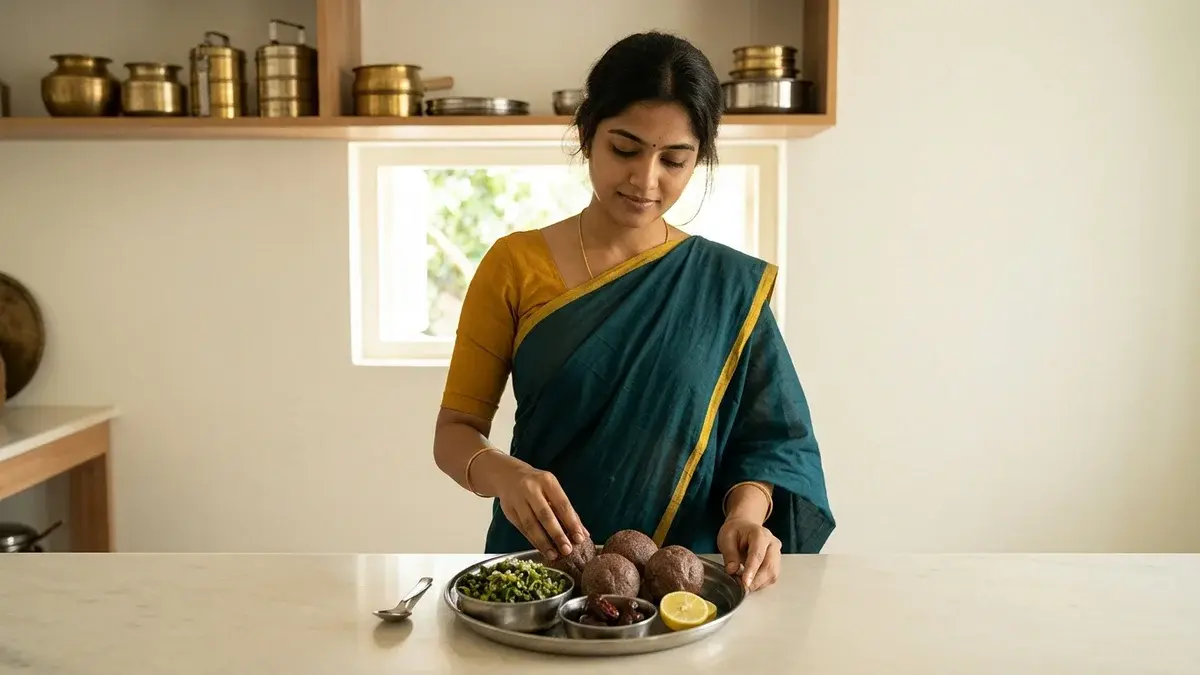
- Iron-rich foods if your periods are heavy: keerai (greens), murungai keerai, dal, ragi, dates, and eggs, fish or meat if you eat them.
- Calcium and magnesium sources: curd, milk, ragi, sesame (ellu), nuts and seeds.
- Go easy on very salty snacks, fried food and lots of coffee or tea, which can add to bloating and make you feel worse.
- Drink enough fluid through the day. Dehydration makes headaches and tiredness worse.
Massage and Relaxation
A gentle massage of the lower tummy or back, using plain coconut or sesame oil, can ease muscle tension. Slow breathing, a short rest in a quiet room, or simply sitting with your feet up for a while lowers stress, which in turn lowers how sharply you feel pain.
Over-the-Counter Pain Relievers
When home measures are not enough, a simple pain reliever can help. The medicines most often used are anti-inflammatory painkillers (NSAIDs), which work by lowering prostaglandin levels, and paracetamol. Antispasmodic tablets are also widely sold in India for cramps.
Some general points:
- Ask your doctor or pharmacist which medicine suits you, and follow the dose on the label or prescription. Do not combine several painkillers on your own.
- Take it early. Pain relievers work best when started at the first sign of cramps or bleeding, rather than once pain is severe.
- Take anti-inflammatory painkillers with food. They can upset the stomach.
- Check with a doctor first if you have stomach ulcers, acidity problems, asthma made worse by painkillers, kidney disease, a bleeding disorder, or if you might be pregnant.
- Needing pain relievers every cycle, or finding they no longer work, is itself a reason to see a gynaecologist.
Period Pain Myths and Facts
Many beliefs about periods are passed down in families. Some are harmless, but others stop women seeking help.
| Myth | Fact |
|---|---|
| Severe period pain is normal and every woman goes through it | Mild cramps are common. Pain that stops daily life is not normal and deserves a check-up |
| The pain will go away after marriage | Marriage has no effect. Pain may ease after childbirth for some, but endometriosis can worsen if left alone |
| Taking a painkiller every month harms fertility | Occasional use of a doctor-advised pain reliever does not affect fertility |
| You should not bathe or wash your hair during periods | Bathing is safe, and a warm bath often eases cramps |
| You must rest in bed and avoid all exercise | Gentle movement usually helps more than complete rest |
| Cold water or curd during periods makes pain worse | There is no evidence for this. Eat a normal balanced diet |
| Strong cramps mean you are very fertile | Pain level does not show how fertile you are |
| Birth control pills for pain cause infertility later | Fertility returns after stopping the pill |
Period Pain Causes That Need a Doctor
When pain is secondary, it comes from a condition in the pelvis. These are the most common ones.
Endometriosis
In endometriosis, tissue similar to the womb lining grows outside the womb, on the ovaries, the tubes, the pelvic lining or the bowel. It bleeds a little each month with nowhere to go, causing inflammation and scarring.
Typical signs are period pain that starts a few days before bleeding and builds year by year, pain during or after sex, pain passing stools or urine during periods, and pelvic pain at other times of the month. It is one of the most common reasons for both severe dysmenorrhoea and difficulty conceiving. Women often wait years for a diagnosis because the pain is dismissed. Read our detailed guide to endometriosis stages, treatment and fertility.
Adenomyosis
In adenomyosis, lining tissue grows into the muscle wall of the womb. The wall thickens and the womb becomes enlarged, rounded and tender. It most often causes heavy, painful periods in women in their late 30s and 40s, especially after childbirth. A scan report may describe a bulky uterus with a patchy or uneven muscle wall. See our guide to adenomyosis and fertility.
Fibroids
Fibroids are non-cancerous lumps of muscle in or on the womb. Many cause no trouble, but fibroids that bulge into the womb cavity can cause heavy bleeding, clots and cramping as the womb tries to push them out. Large ones cause pressure, back ache and frequent urination. Read more about uterine fibroids and fertility.
Pelvic Inflammatory Disease (PID)
PID is an infection of the womb, tubes and ovaries. It can cause pelvic pain, painful periods, fever, unusual discharge and pain during sex. Untreated or repeated infection can scar the fallopian tubes, which affects fertility, so prompt antibiotic treatment matters.
Other Causes
- Endometrial polyps and other growths of the lining.
- Ovarian cysts, especially endometriomas (blood-filled cysts linked with endometriosis).
- A copper IUD (coil), which can make periods heavier and crampier in the first months.
- Pelvic adhesions (scar tissue) after surgery or infection.
- Rarely, a narrow cervix or a womb shape someone was born with that blocks the flow of blood.
Red Flags: See a Doctor If You Have
- Pain that keeps you home from college or work, or is getting worse each year.
- Cramps that do not ease with heat, rest and a pain reliever.
- Pain that starts days before your period or continues after it ends.
- Pain during or after sex, or when passing stools or urine.
- Very heavy periods: soaking a pad every hour or two, large clots, or bleeding beyond 7 days.
- Bleeding between periods or after sex.
- Painful periods starting for the first time after age 25.
- Difficulty getting pregnant.
When to Go Straight to Hospital
Sudden severe pelvic pain with fainting, fever, vomiting, or a missed or late period needs urgent care the same day. It can be a sign of an ectopic pregnancy, a twisted or burst ovarian cyst, or a serious infection.
Irregular or very unpredictable cycles alongside pain are also worth checking; see our guide to irregular periods.
How Doctors Find the Cause of Severe Period Pain
There is no single test for period pain. Your doctor builds the picture step by step.
Your History and a Period Diary
The most useful information comes from you. Before your visit, note for two or three cycles:
| What to note | Why it helps |
|---|---|
| Start and end dates of each period | Shows cycle length and regularity |
| Pain score from 1 to 10 each day | Shows how severe it is and when it peaks |
| Pads or cups used per day, and any clots | Shows whether bleeding is heavy |
| Medicines taken and how much they helped | Shows whether simple treatment is enough |
| Pain at other times, during sex, or with stools or urine | Points towards endometriosis or adenomyosis |
Examination
A gentle tummy and, where suitable, internal examination can show tenderness, an enlarged womb or a fixed, less mobile womb that suggests scarring. For young women who have never been sexually active, an internal exam is usually not needed.
Ultrasound Scan
A transvaginal ultrasound, with a slim probe placed in the vagina, gives the clearest view of the womb and ovaries. It shows fibroids, adenomyosis, polyps and ovarian cysts, including endometriomas. Women who have not been sexually active have a scan through the tummy instead.
Other Tests
- Swabs and blood tests if infection is suspected.
- Blood count to check for anaemia when periods are heavy.
- MRI when the scan is unclear, or to map deep endometriosis or adenomyosis before surgery.
- Hysteroscopy, a thin camera passed through the cervix, to look inside the womb for polyps or fibroids.
- Laparoscopy (keyhole surgery), the only way to see and confirm endometriosis that does not show on a scan, and to treat it at the same time.
A normal scan does not rule out endometriosis, since small patches often do not show. If your symptoms fit, your doctor may start treatment based on them.
Treatment for Painful Periods
Treatment depends on the cause, how much the pain affects you, and whether you want to become pregnant soon.
Primary Dysmenorrhoea
Most women do well with home measures plus a pain reliever started early. If that is not enough, hormonal treatment is the next step. These options lighten periods and reduce prostaglandins:
- The combined contraceptive pill, which can be taken in a way that gives fewer periods.
- Progestogen-only options, such as tablets, an implant or an injection.
- A hormonal coil (IUD), which sits in the womb and thins the lining. It often greatly reduces both pain and bleeding.
These are reversible. Fertility returns after stopping them, but they are not used while you are trying to conceive.
Endometriosis
Pain relief and hormonal treatment control symptoms for many women. When pain persists, or when endometriosis affects fertility, laparoscopic surgery to remove patches and scar tissue may help. Our endometriosis treatment page explains the options and how we plan them around family goals.
Adenomyosis
A hormonal coil, pills or other hormone treatment can ease heavy, painful periods. For women planning pregnancy, treatment is timed around fertility plans. Hysterectomy is considered only for severe symptoms once a woman's family is complete.
Fibroids
Fibroids that bulge into the womb cavity can often be removed through the vagina with a hysteroscope, with no cuts on the tummy. Larger fibroids may be removed by myomectomy, often by keyhole surgery, which keeps the womb.
PID
Infection is treated with a full course of antibiotics, and your partner usually needs treatment too to prevent reinfection.
Other Support
- Iron if heavy bleeding has caused anaemia.
- Pelvic physiotherapy for long-standing pelvic pain and tight pelvic floor muscles.
- TENS machines, small devices that send a gentle electrical tingle through pads on the skin, help some women.
- Support for sleep, stress and mood, since chronic pain and low mood feed each other.
Does Period Pain Affect Fertility?
Primary dysmenorrhoea does not affect fertility. If your cramps are typical and your scan is normal, they say nothing bad about your chances of pregnancy.
Secondary causes can affect fertility, which is another reason not to ignore severe pain:
- Endometriosis can scar the tubes and ovaries, affect egg quality and make implantation harder.
- Adenomyosis may lower the chance of implantation and raise the risk of miscarriage.
- Fibroids inside the womb cavity can interfere with implantation.
- PID can block the fallopian tubes.
The good news is that many women with these conditions conceive naturally, and treatment can improve the chances for others. If you have painful periods and have been trying for 12 months, or 6 months if you are 35 or older, a fertility check is a sensible next step. With known endometriosis or severe symptoms, it is reasonable to seek advice sooner.
Period Pain at Different Life Stages
Teenagers
Cramps are common in the first few years of periods. Heat, movement and a suitable pain reliever usually help. A teenager who regularly misses school because of period pain, faints, or has pain that does not respond to simple measures should be seen by a gynaecologist. Endometriosis can begin in the teens.
Your 20s and 30s
New or worsening pain in these years points more often to endometriosis or fibroids. This is also when many women plan pregnancy, so getting a clear diagnosis early keeps more options open.
After Childbirth and in Your 40s
Adenomyosis and fibroids become more common. Periods may become heavier and more painful in the years before menopause. Treatment focuses on controlling symptoms, and both conditions usually settle after menopause.
Frequently Asked Questions About Period Pain Relief
What is the fastest way to relieve period pain at home?
Heat on the lower tummy, a warm drink and lying with your knees drawn up give quick comfort. If pain is still strong, a pain reliever your doctor or pharmacist has advised works best when taken early.
Is severe period pain normal?
No. Mild to moderate cramps for a day or two are common, but pain that stops you from working, studying or sleeping, or gets worse each year, should be checked for conditions such as endometriosis or adenomyosis.
What is the difference between primary and secondary dysmenorrhoea?
Primary dysmenorrhoea is period pain without any underlying disease, usually starting in the teens. Secondary dysmenorrhoea is caused by a condition such as endometriosis, adenomyosis, fibroids or infection, and often starts later or worsens over time.
Can period pain affect my chances of getting pregnant?
Ordinary period cramps do not affect fertility. Severe pain caused by endometriosis, adenomyosis, fibroids or PID can, so it is worth getting checked, especially if you are planning a pregnancy.
Which foods help with menstrual cramps?
Warm drinks such as ginger tea, regular balanced meals, iron-rich greens and dal, and calcium sources like curd and ragi help you feel better. Cutting down on salty, fried food and excess coffee can reduce bloating.
Do birth control pills help period pain?
Yes. Hormonal pills, the hormonal coil and other hormone treatments lighten periods and reduce cramps for many women. Fertility returns after stopping them.
When should I see a doctor for period pain?
See a doctor if pain does not improve with home care and pain relievers, lasts beyond your period, comes with very heavy bleeding or pain during sex, or if you are having trouble conceiving. Sudden severe pain with fever or fainting needs urgent care.
Can a normal ultrasound rule out endometriosis?
Not always. Small patches of endometriosis often do not show on a scan, so a doctor may still suspect it from your symptoms and suggest treatment or laparoscopy.
Period Pain Care at Yaal Fertility Centre, Chennai
At Yaal Fertility Centre, our gynaecology team led by Dr. Rukkayal Fathima, MRCOG (UK) listens to your symptoms, checks for the causes that are often missed, and explains in plain words whether your cramps are the ordinary kind or a sign of something that needs treatment. We start with the simplest treatment that works, and we keep your future fertility in mind at every step.
You can see our team at any of our eight centres across Chennai: Kilpauk, Mylapore, Thiruvanmiyur, Pallikaranai, Madipakkam, Red Hills, Velappanchavadi and Tambaram.
If period pain is disrupting your life, or simple remedies no longer help, book a consultation with Yaal Fertility Centre.
Written by
Dr. Rukkayal Fathima
Specialist at Yaal Fertility Centre, Chennai. Providing expert guidance on fertility and women's health.